


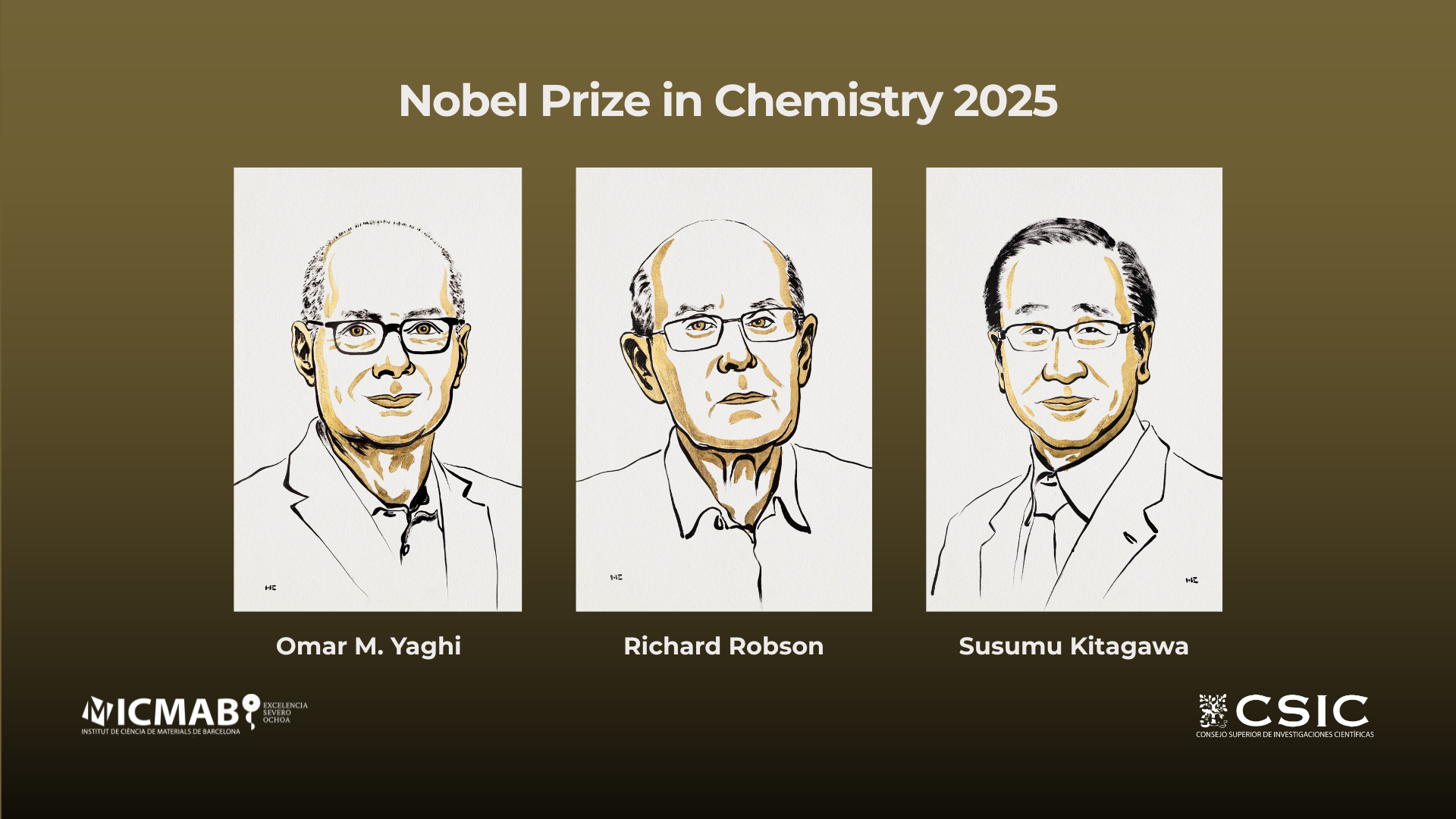
The Nobel Committee praised the Chemistry laureates for “turning chemistry into architecture,” recognizing how their discoveries have enabled materials capable of capturing CO₂, storing hydrogen, delivering drugs, or even harvesting water from the air.
Advancing MOF research at ICMAB
Among them, the Inorganic Materials & Catalysis Group (LM), with researchers Jose Giner and Elena Bartolomé, and the Supercritical Fluids and Functional Materials group (within the Solid State Chemisty unit), with researchers Concepción Domingo and Ana López-Periago, stand out for their contributions to multifunctional and flexible MOFs, many of which embody the same principles that earned this year’s Nobel Prize.
Designing multifunctional MOFs for energy and the environment
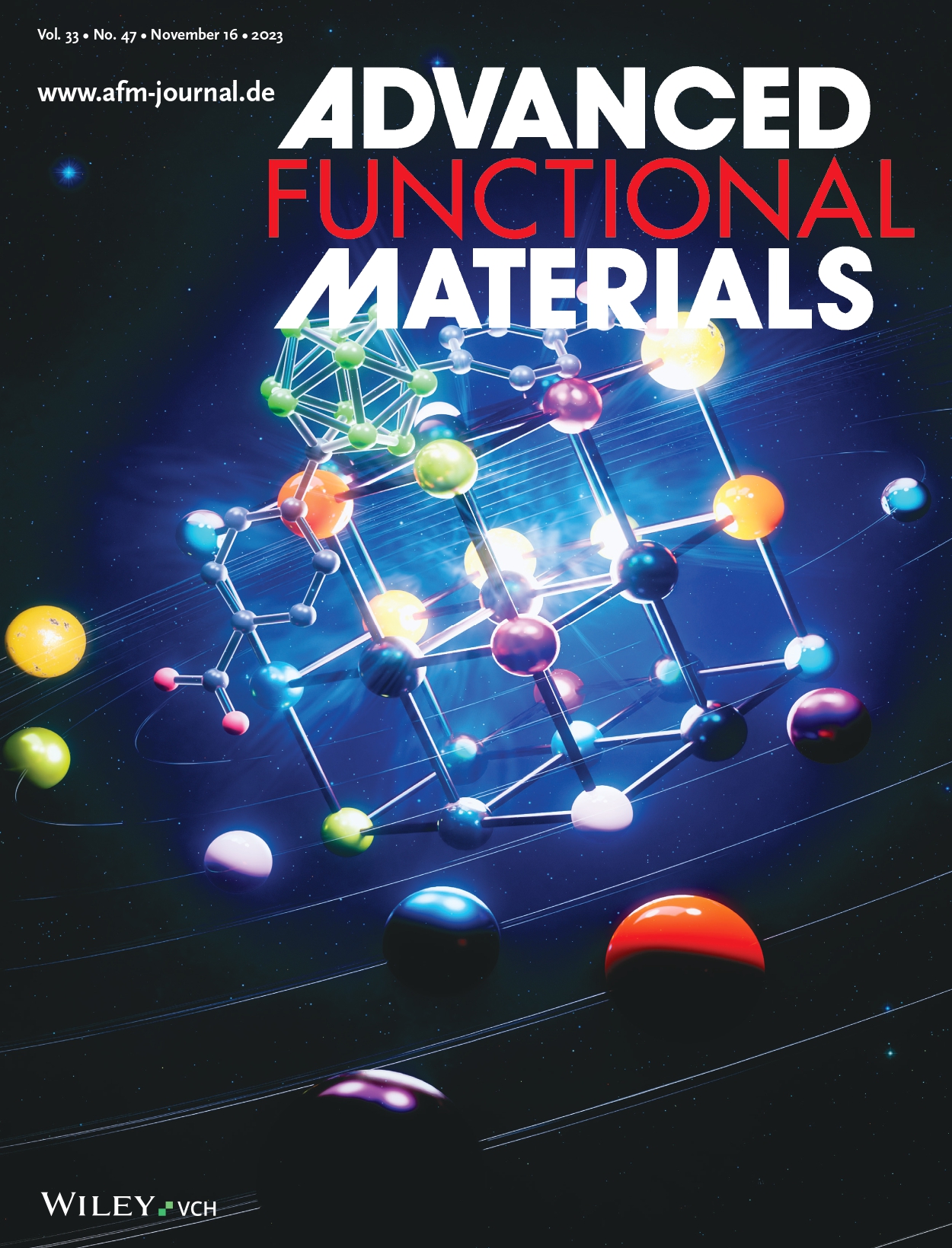
Jose Giner and colleagues research focus on the syntheses of new metal-organic frameworks for energy, environmental or anticounterfeiting applications. For example, they have pioneered a method that enables the creation of multi-metallic MOFs with any desired combination of lanthanide ions, facilitating the synthesis of multifunctional materials with tailored properties, and the investigation of novel “compositionally complex materials” with unexplored phenomena.
Exploring quantum and magnetic MOFs
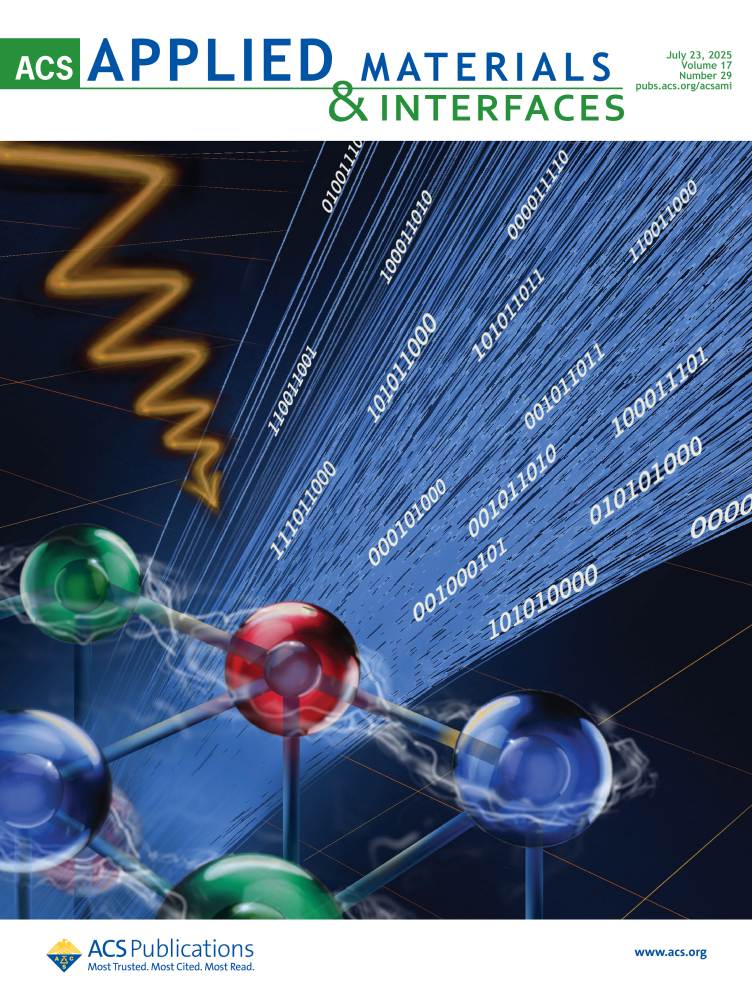
Elena Bartolomé explores the magnetic and quantum properties of multifunctional MOFs built from lanthanide or transition-metal ions. Her team has reported lanthanide 2D MOFs that can be exfoliated or grafted on silicon, gadolinium-based MOFs for on-surface cooling, and “QMOFs” that organize qubits-opening pathways toward new generations of molecular spintronic and quantum devices.
Greener synthesis and environmental applications
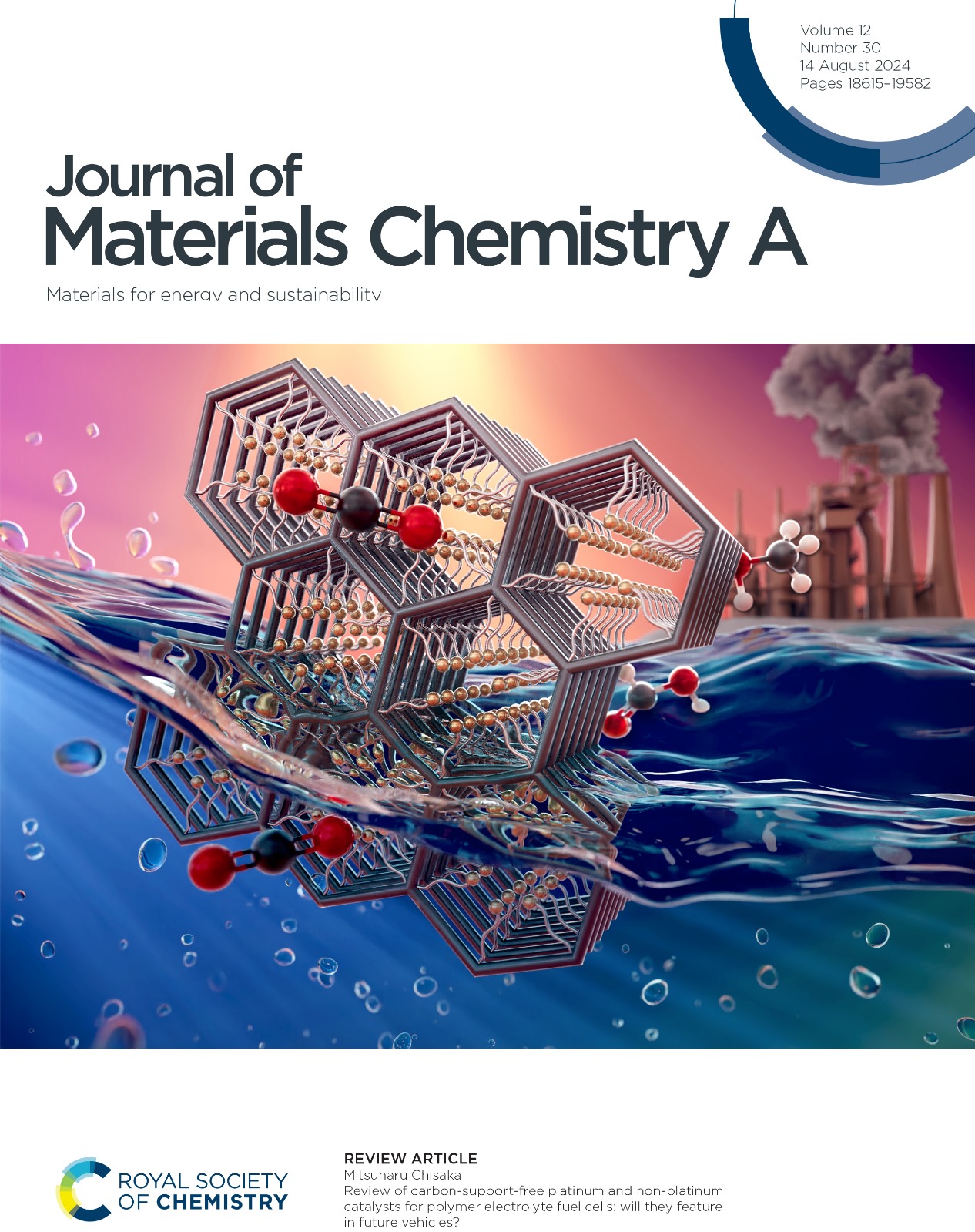
Concepción Domingo and Ana López-Periago focus on using MOFs for environmental and catalytic purposes. Their work includes zirconium-based MOFs designed for CO₂ adsorption and catalytic conversion, as well as hybrid MOFs-graphene oxide aerogels capable of removing toxic mercury ions from water. Motivated by the use of greener synthetic methods, a recurring feature of their work is the use of eco-friendly supercritical CO2 for the MOFs synthesis. These projects illustrate how MOFs can make a tangible contribution to sustainability and pollution remediation.
Aligning local excellence with global milestones
For ICMAB, the Nobel recognition reinforces the institute’s long-standing engagement with modular and tunable materials that bridge chemistry, physics, and engineering. It highlights how local research aligns with global scientific milestones — and how ICMAB scientists continue to push the limits of what MOFs can do, from smart catalysis to quantum materials.
Beyond MOFs: A Science with a Nobel Laureate
Beyond MOFs, ICMAB’s Jordi Faraudo has also recently co-authored a paper in Science this 2025 together with Nobel Laureate Omar M. Yaghi. The article, “Excision of organic macrocycles from covalent organic frameworks”, explores fundamental processes in covalent organic frameworks (COFs). Faraudo’s contribution focuses on computational and molecular dynamics simulations that help understand the structure and behavior of complex molecular systems — showcasing how theoretical and simulation approaches at ICMAB can complement experimental advances led by world-renowned researchers.
Related news
- New cover on Applied Materials & Interfaces on quantum metal–organic frameworks (QMOFs) (ACS Appl. Mater. Interfaces 2025)
- New papers on magnetism, metal-organic frameworks and new battery materials (J. Mater. Chem. C, 2025)
- Metal-organic frameworks built from a carborane linker isolating ideal one-dimensional large-spin chains of Co (S = 3/2) or Ni (S = 1) (J. Mater. Chem. C, 2025)
- A Triple-Site Gd3 Carborane Metal–Organic Framework toward Scalable Quantum Computing (ACS Applied Materials & Interfaces, 2025)
- Magnetic and luminescent lanthanoid (Ln = Tb, Dy) 2D MOFs on functionalized silicon (J. Mater. Chem. C, 2025)
- Novel zirconium-based MOF@rGO composite aerogel: Towards remediation of Hg(II) polluted water bodies to reach safe drinking limits (Chemical Engineering Journal, 2025)
- Multifunctional Eu(iii) and Sm(iii) coordination polymers built with silane-bridged dicarboxylate ligand: structure, luminescence and magnetism (J. Mater. Chem. C, 2025)
- Multifunctionalized zirconium-based MOF as a novel support for dispersed copper: application in CO₂ adsorption and catalytic conversion (J. Mater. Chem. A, 2024)
- A new molecular Gd-based 2D metal-organic framework opens new frontiers to on-surface magnetic cooling of technological devices (J. Mater. Chem. A, 2024)
- Magnetic properties and magnetocaloric effect of Ln = Dy, Tb carborane-based metal–organic frameworks (Dalton Transactions, 2024)
- Multifunctional self-refrigerated multivariate {GdLn} (Ln = Dy, Tb, Tb/Eu) metal–organic frameworks (J. Mater. Chem. A, 2024)