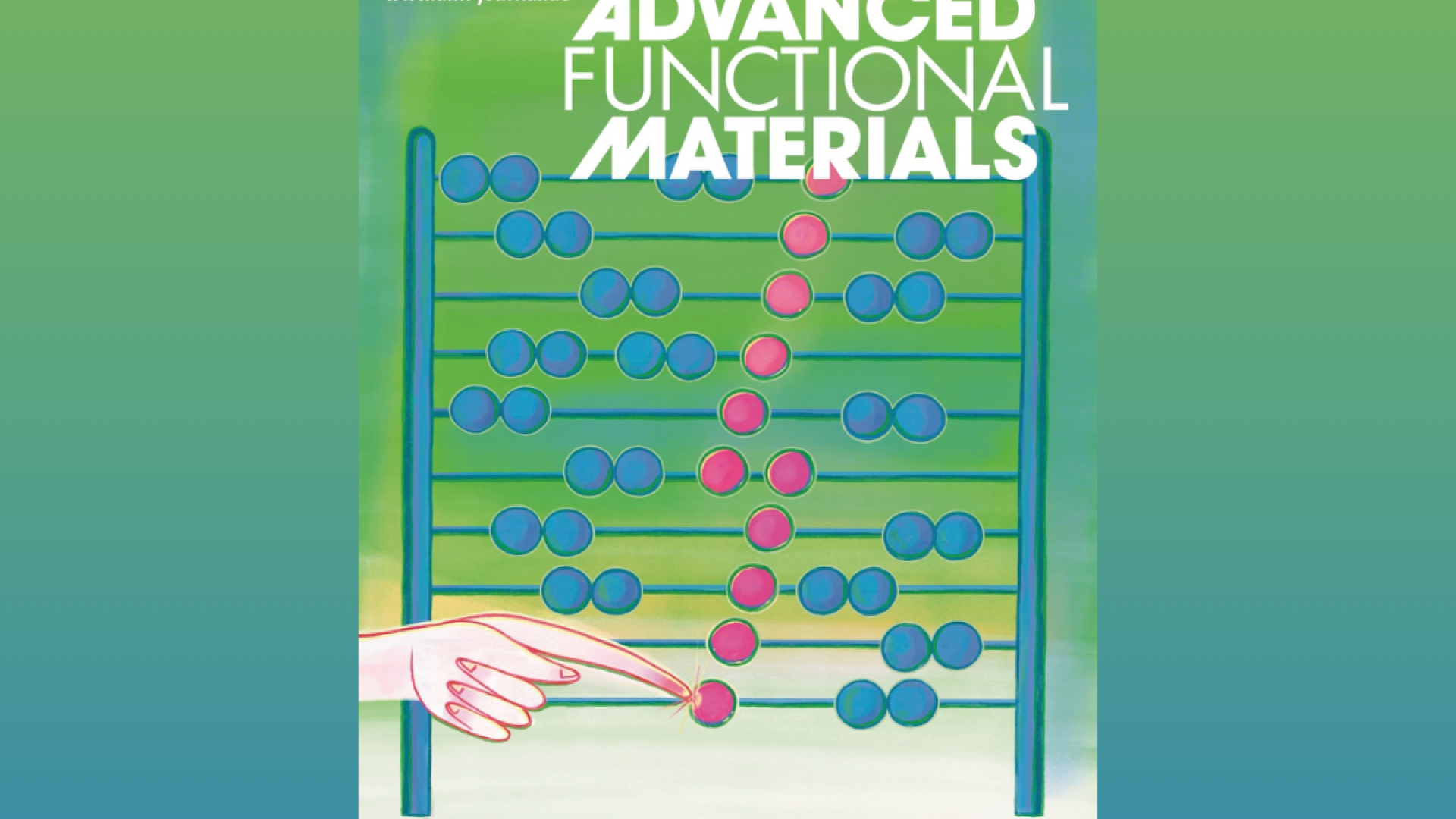
Researchers from ICMAB-CSIC, the Politecnico di Milano and Universtité de Liège have adapted a direct laser writing technique that allows them to “draw” superconducting properties in a material. The result is a new way to locally programme the behaviour of a superconductor, tuning it from a fully superconducting state to an insulating one with extraordinary precision.
High-temperature superconductors (HTSC) are materials that can conduct electricity without resistance at higher temperatures than conventional superconductors. Since they can operate at temperatures achievable using inexpensive liquid nitrogen cooling, they are considered promising candidates for future applications such as quantum technologies, superconducting electronics, or next-generation memory devices.
However, patterning HTSC is particularly difficult at very small scales, as their ceramic nature makes them sensitive to conventional micro- and nanofabrication methods. The level of oxygen of the material is what is key to determine its behaviour: whether it is superconducting or insulating.
“Having a whole homogeneous sample, all well oxygenated, is easy. As well as having it uniformly deoxygenated”, says Anna Palau, one of the paper’s corresponding authors. “The difficult part is to have small patterns with different oxygenation levels throughout the same film.”
A laser that “draws” like a pen
To overcome this limitation, the researchers used a focused laser to locally modify the material, controlling the oxygen levels point-by-point with high precision. By varying the laser power and exposure time, the researchers were able to create regions with different properties, allowing them to pattern the material in a similar way of a pen in a paper. That pattern then allows to have parts that are insulating next to superconducting ones, as well as any intermediate gradient.
“This approach opens new possibilities for the design of superconducting devices with tailored properties. The ability to locally tune superconducting behaviour could be exploited in devices such as resonators, memory elements and components for quantum technologies, and could contribute to more energy-efficient information and communication technologies”, explain Edoardo Albisetti and Daniela Petti, corresponding authors of the study with Anna Palau. The research received funding from the H2020 ERC Starting Grant B3YOND (no. 948225).
Original paper
Nanoscale Spatial Tuning of Superconductivity in Cuprate Thin Films via Direct Laser Writing
Biancardi, I., Levati, V., Alcalà, J., Günkel, T., Lejeune, N., Girelli, R., Silhanek, A. V., Russo, V., Mestres, N., Petti, D., Palau, A., & Albisetti, E.
Advanced Functional Materials, 36(78)
DOI: 10.1002/adfm.77288
Download the press release in CAT, ESP and ENG.
Related news