


Awards
18 ICMAB researchers featured in the 2026 Stanford–Elsevier Ranking of the World's Top 2% Scientists
The 2026 update of the Updated science-wide author databases of standardized citation indicators, commonly known as the Stanford–Elsevier Ranking of the World's Top 2% Scientists, has been published by Elsevier. This year's edition includes 18 ICMAB researchers in the career-long ranking and 17 in the single-year ranking, recognising their scientific impact and contributions to research in materials science and related fields.
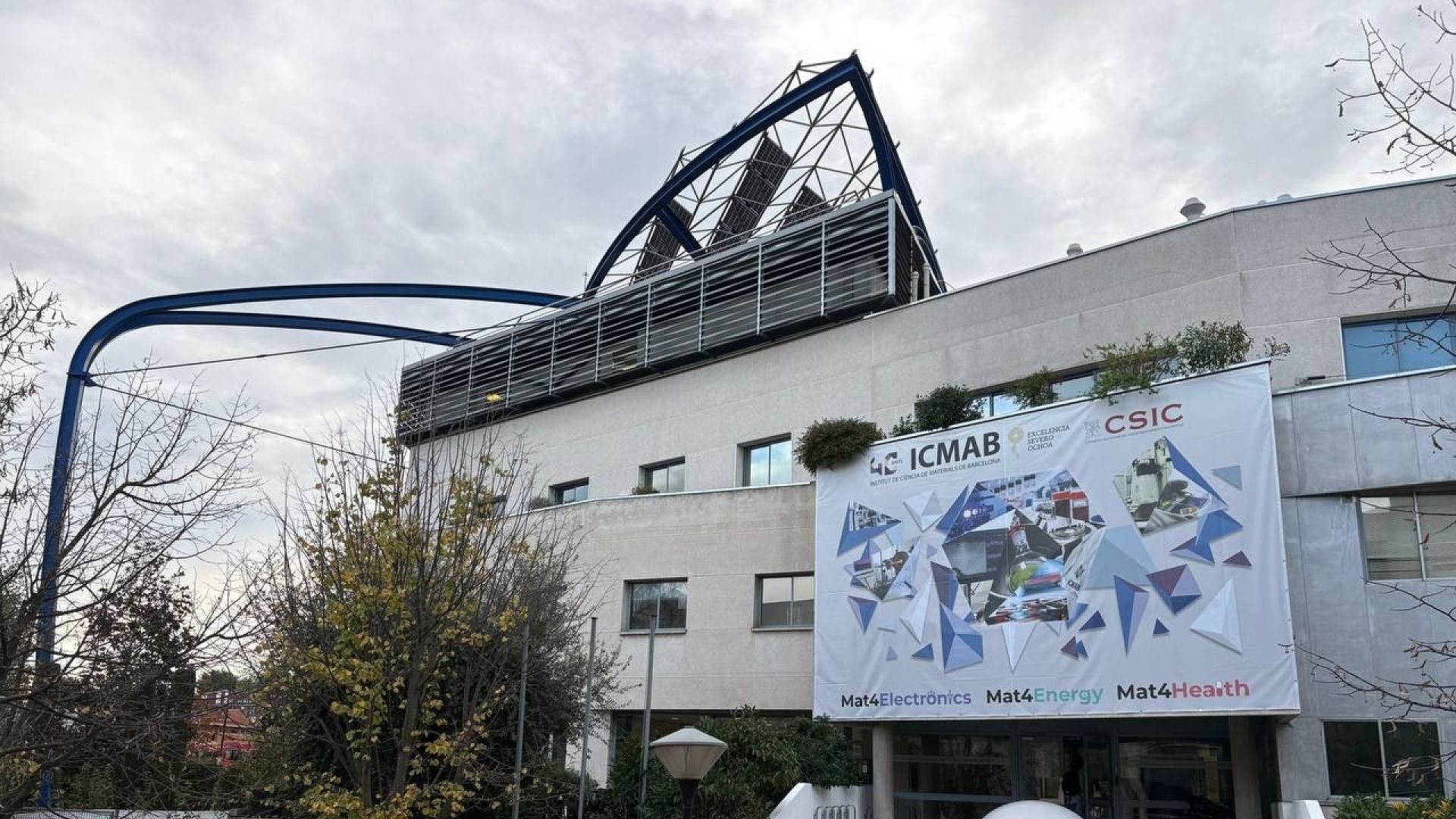
The database, developed by Professor John P. A. Ioannidis and collaborators at Stanford University and published by Elsevier, identifies highly cited scientists worldwide using standardised bibliometric indicators. The latest update, published in October 2026, is based on Scopus data and includes citations up to the end of 2025.
Understanding the Stanford–Elsevier Ranking
The Updated science-wide author databases of standardized citation indicators provides a comprehensive overview of the citation impact of scientists across different disciplines. Researchers are classified into 20 major scientific fields and 174 subfields, following the Science-Metrix classification.
The database offers two complementary perspectives on scientific impact. The career-long ranking considers the cumulative citation impact of researchers throughout their scientific careers, while the single-year ranking focuses on citations received during the most recent calendar year, in this case 2025. Together, these two categories provide insight into both the long-term influence of scientific work and more recent research visibility.
The ranking combines several bibliometric indicators, including total citations, the h-index, the hm-index adjusted for co-authorship, and citations to papers according to the author's position (single, first or last author). These indicators are integrated into a composite score known as the c-score, which aims to capture different dimensions of scientific impact while accounting for authorship and collaboration.
Although these rankings provide an international reference for comparing citation impact, bibliometric indicators cannot capture the full value of scientific research, its societal contribution or the quality of individual scientific work.
ICMAB researchers in the 2026 ranking
This year's edition features 18 ICMAB researchers in the career-long ranking. They are M. Rosa Palacín, David B. Amabilino, Josep Fontcuberta, Concepció Rovira, Massimiliano Stengel, Enric Canadell, Riccardo Rurali, Francesc Teixidor, Clara Viñas, Kasper Moth-Poulsen*, Xavier Obradors, Jordi L. Rius, Mariano Campoy-Quiles, Amparo Fuertes, Jaume Veciana, Alexandre Ponrouch, Concepción Domingo-Pascual and Elies Molins.
In the single-year ranking, which reflects citations received during 2025, 17 ICMAB researchers are included: M. Rosa Palacín, Kasper Moth-Poulsen*, Massimiliano Stengel, Alexandre Ponrouch, Can Onur Avci, Josep Fontcuberta, Francesc Teixidor, Ignasi Fina, Clara Viñas, Riccardo Rurali, David B. Amabilino, Florencio Sánchez, Xavier Obradors, Amparo Fuertes, Elies Molins, Enric Canadell and Paula Mayorga-Burrezo.
Comparing both categories, 13 researchers appear in both rankings: M. Rosa Palacín, David B. Amabilino, Josep Fontcuberta, Massimiliano Stengel, Enric Canadell, Riccardo Rurali, Francesc Teixidor, Clara Viñas, Kasper Moth-Poulsen, Xavier Obradors, Amparo Fuertes, Alexandre Ponrouch and Elies Molins.
The career-long ranking also includes Concepció Rovira, Jordi L. Rius, Mariano Campoy-Quiles, Jaume Veciana and Concepción Domingo-Pascual, while Can Onur Avci, Ignasi Fina, Florencio Sánchez and Paula Mayorga-Burrezo appear in the single-year ranking.
The presence of researchers in both categories highlights the combination of sustained scientific influence and recent citation impact within the institute.
The evolution of ICMAB researchers in the ranking
The number of ICMAB researchers featured in the Stanford–Elsevier ranking has remained consistently high over the past six editions, showing an overall positive trend in both categories.
In the career-long ranking, the number of ICMAB researchers has increased from 13 in 2020 to 18 in 2025. After reaching 14 researchers in both 2021 and 2022, the figure rose to 17 in 2023 and remained stable in 2024, before reaching its highest value to date in the latest edition. This represents an increase of almost 40% compared with 2020.
The single-year ranking has also shown significant growth, although with more fluctuations. The number of ICMAB researchers increased from 12 in 2020 to 16 in 2021, before decreasing to 14 in 2022. It subsequently rose to 16 in 2023 and reached a peak of 18 in 2024. In the 2025 edition, 17 ICMAB researchers are included, five more than in 2020.
These figures illustrate the institute's sustained international scientific visibility, with a particularly positive evolution in the career-long ranking and a consistently strong presence in the single-year category.
Exploring the ICMAB profile on TopSciNet
In addition to the original Elsevier database, the results can also be explored through TopSciNet, an online platform that presents and visualises information from the Stanford–Elsevier World's Top 2% Scientists database.
TopSciNet provides institutional profiles that make it possible to explore researchers associated with different organisations and consult their presence in the various ranking categories. Its institutional profile for the CSIC – Instituto de Ciencia de Materiales de Barcelona (ICMAB) offers an additional perspective on the institute's representation in the ranking, particularly through its single-year profile.
The platform is a useful complementary resource for exploring and visualising the data, making it easier to examine institutional representation and the presence of researchers in the different editions. The original bibliometric data, however, are provided by Elsevier.
Explore the ICMAB profile on TopSciNet.
Recognising scientific excellence at ICMAB
The inclusion of 18 ICMAB researchers in the career-long ranking and 17 in the single-year ranking reflects the institute's strong international visibility and its sustained contributions to materials science.
These results highlight the work of researchers across different scientific areas and generations, reinforcing ICMAB's commitment to advancing knowledge and developing innovative materials for future technologies.
Congratulations to all the researchers recognised in this year's edition!
More information: Elsevier Data Repository – 2026 update, ICMAB profile on TopSciNet and ICMAB researchers recognised in the 2025 edition.
*Kasper Moth-Poulsen is also affiliated with the Universitat Politècnica de Catalunya (UPC).