


A new paper has been published in the journal Polyoxometalates
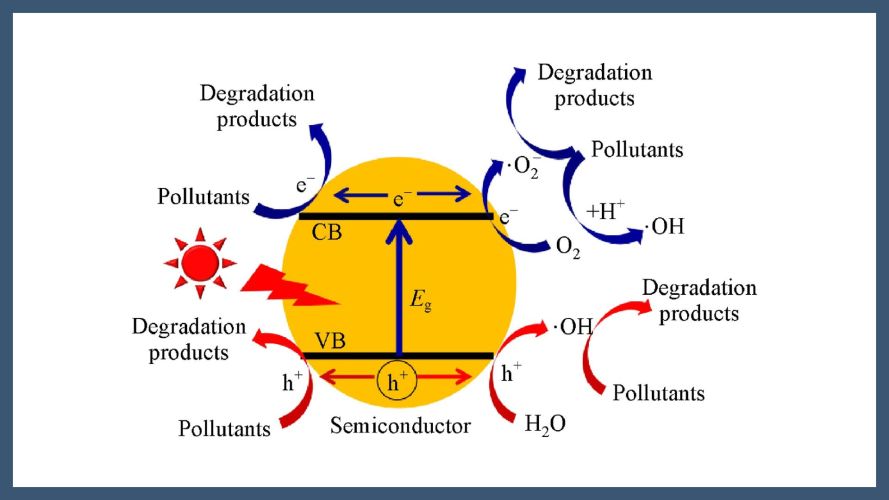
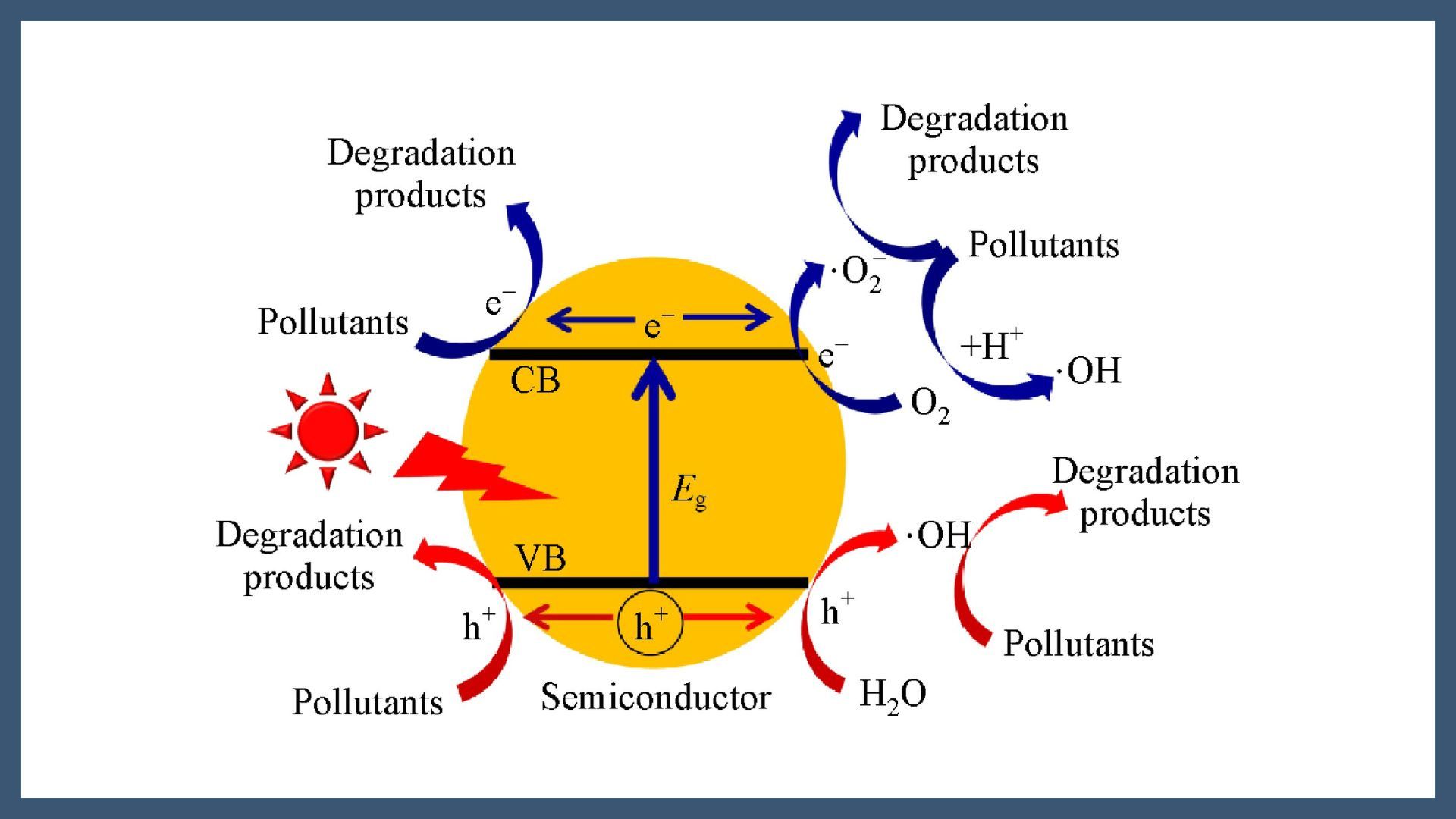
The quality of the ecological environment is closely related to human health. Organic dyes emitted from textile industries, such as rhodamine B (RhB) and methylene blue (MB), pose a significant risk for illness in humans, thus shortening their life span. Photocatalysis is an effective and environment-friendly approach for the degradation of dyes. TiO2 has gained attention as a prospective photocatalyst since its initial use in single-crystal electrodes for water photolysis. However, its wide band gap substantially hampers its photocatalytic rate. Thus, to reduce the band gap and the recombination rates of electron–hole pairs, we incorporated TiO2 into polyoxometalate-organic frameworks (POMOFs), specifically {[Ni6(OH)3(H2O)5(PW9O34)](1,2,4-Hbtc)}·H2enMe·5H2O, to create a composite cluster TiO2@Ni6-POMOF. Composites with 1 wt.% Ni6-POMOFs exhibited the best photocatalytic efficiency and displayed high photocatalytic rates in a strongly acidic environment when used to degrade RhB and MB under visible light (450 nm). The successful integration of POMOFs with TiO2 not only offers innovative design concepts for photocatalysts with complex structures but also opens a new approach for the development of POMOF catalysts in the future.
M4HTH Smart Nanomedicine
Titanium dioxide@polyoxometalate-organic framework as an efficient photocatalyst for dye degradation under visible light conditions
Sun, Hao; Wu, Mei; He, Danyang; Luo, Yuan; Shang, Wenhui; Jiang, Yan; Liu, Manyu; Zeng, Muling; Wang, Nan; Jia, Zhiyu
Polyoxometalates, Volume 4 Issue 2, June 2025, 9140089
DOI: 10.26599/POM.2025.9140089

