


A new paper has been published in the journal ChemSusChem.
The sustainable management and valorization of unsaturated fatty acid-rich lipid streams is a key challenge within circular economy strategies.
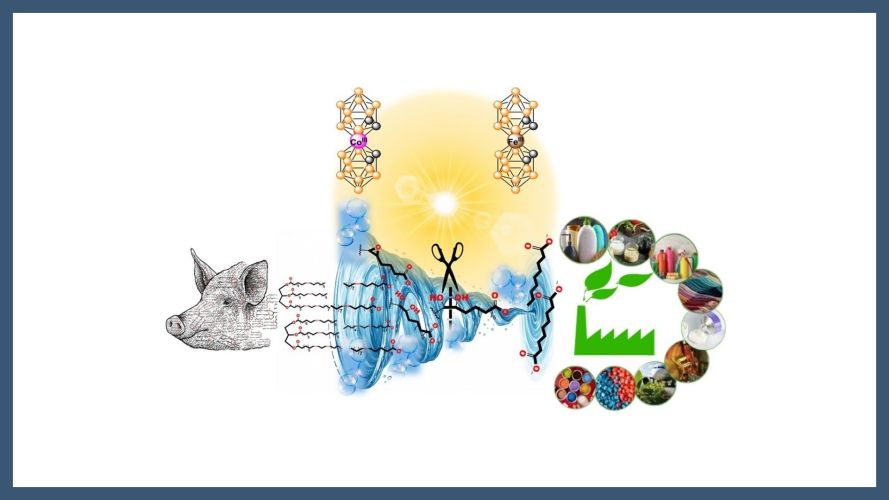
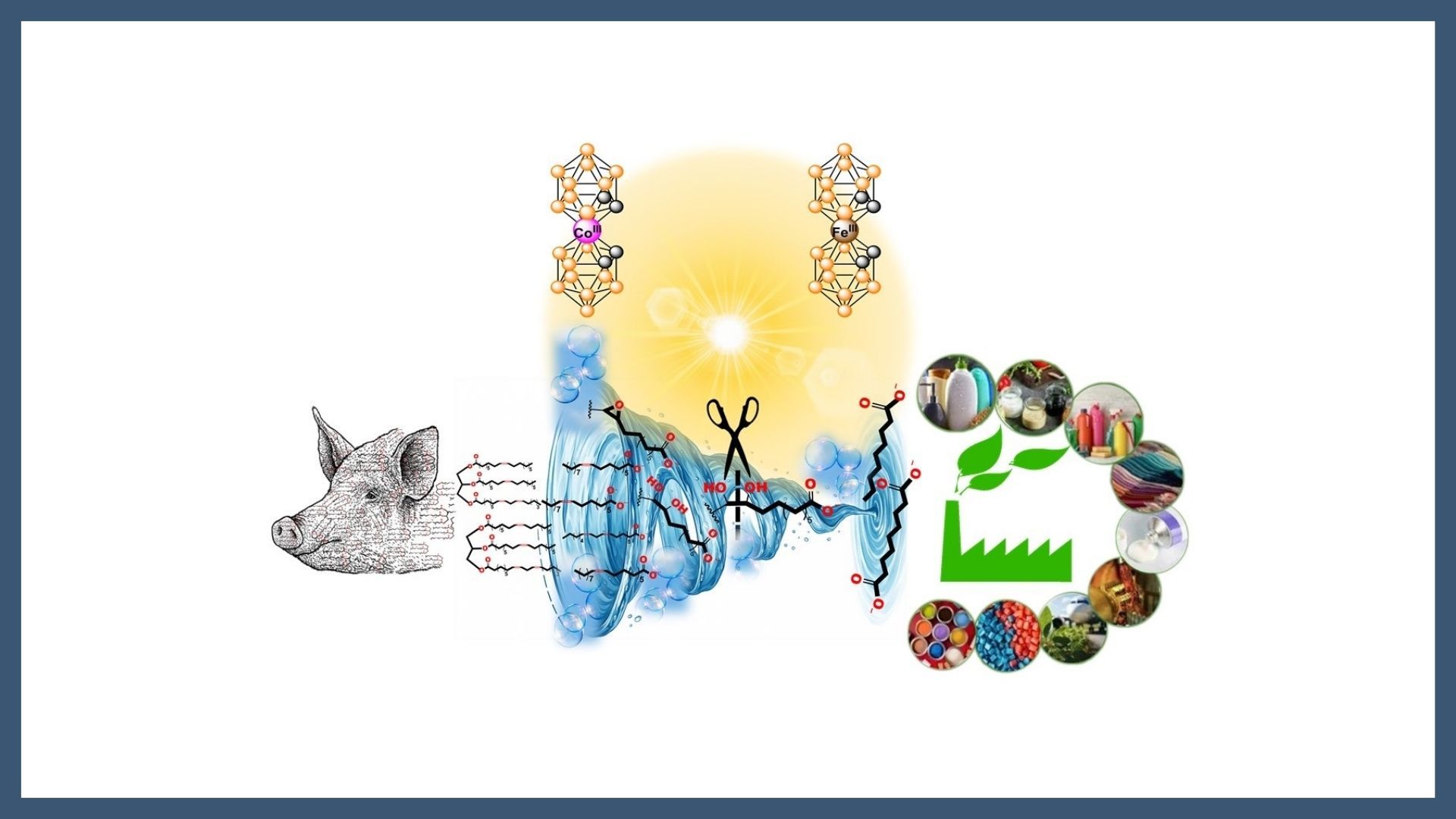
Herein, we present a proof of concept for the photoredox oxidation of unsaturated fatty acids using θ-metallacarborane complexes Na[Co(1,2-C2B9H11)2] ([Na]1) and Na[Fe(1,2-C2B9H11)2] ([Na]2) as water-soluble, earth-abundant photoredox catalysts. Commercial sunflower oil and pork lard served as convenient model systems mimicking waste lipid streams, while targeting future application to postconsumer used cooking oils. Under UVA irradiation in aqueous media, these complexes convert oleic- and linoleic-acid derivatives into epoxides, vicinal diols and shorter-chain oxygenated acids, with reaction selectivity finely tuned by pH, irradiation time and oxidant. Notably, [Na]1 exhibits superior oxidative power and acts as a “molecular scissor,” promoting C─C bond cleavage of vicinal diols and enabling the formation of mono- and dicarboxylic acids such as pelargonic and azelaic acids, valuable nonpetroleum-based building blocks. Sodium persulfate affords high conversions with controlled over-oxidation, while O2 enhances diol selectivity.
θ-Metallacarboranes thus emerge as a sustainable platform for upgrading waste lipid streams into value-added chemicals in water, advancing circular economy goals without competing with food supply chains.
M4HTH Smart Nanomedicine
θ-Metallacarboranes as Sustainable Photoredox Oxidation Catalysts of Unsaturated Fatty Acids From Oil and Pork Lard
Isabel Guerrero, Clara Viñas, Isabel Romero, Rosario Núñez, Francesc Teixidor
ChemSusChem, Volume19, Issue19, 14 October 2026
DOI: 10.1002/cssc.71113

