


A new paper has been published in Chemical and Biomedical Imaging:
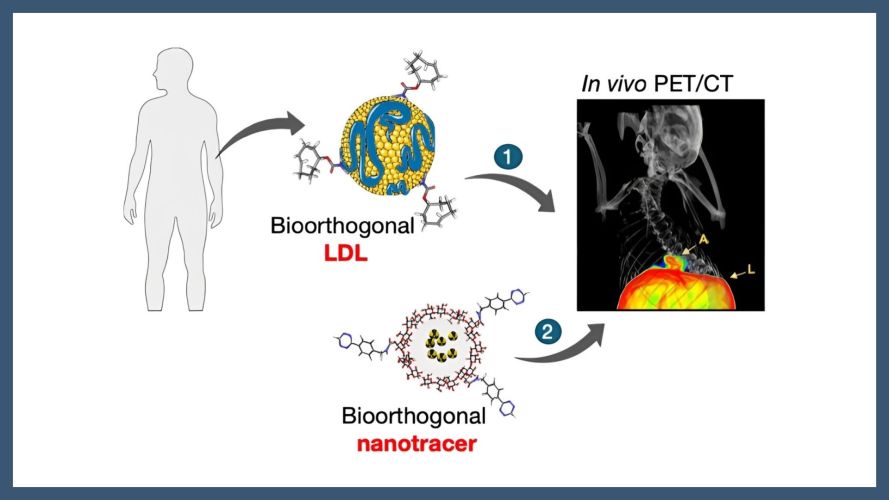
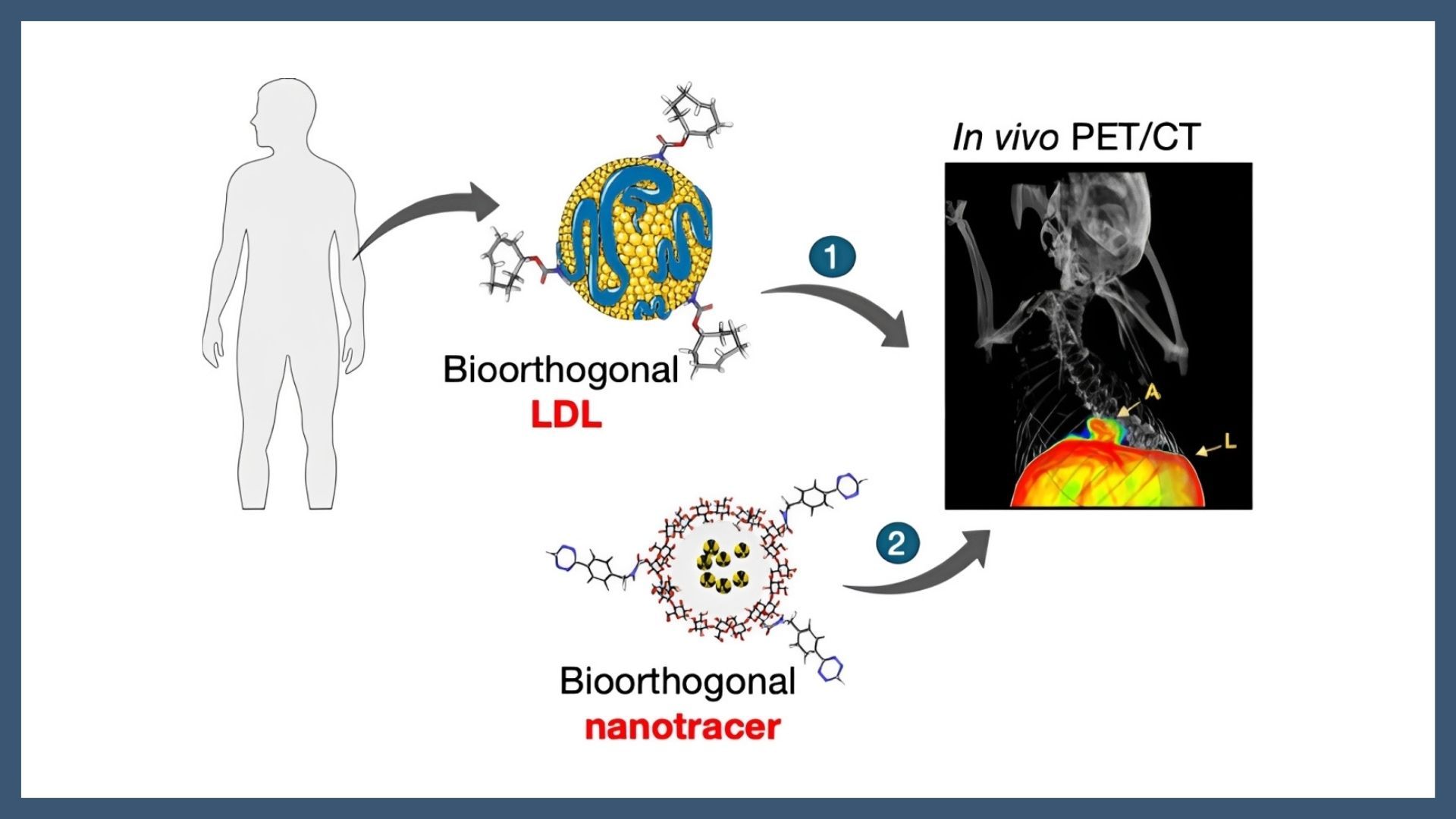
Low-density lipoprotein (LDL) plays a central role in the development of atherosclerosis, making its detection critical for cardiovascular disease management. Radionuclide imaging of LDL offers distinct advantages over other modalities but remains limited by poor specificity and the need for long-lived isotopes. We present a click chemistry-based PET imaging strategy using gallium-68 (68Ga), a short-lived radionuclide, for the specific detection of LDL accumulation in atherosclerotic plaques. The approach relies on a two-step inverse electron-demand Diels–Alder reaction between trans-cyclooctene (TCO)-modified LDL and tetrazine-functionalized iron oxide nanoparticles radiolabeled with 68Ga. In vivo PET/CT imaging in LDL receptor-deficient (LDLr–/–) mice showed selective uptake of the nanoparticles in atherosclerotic lesions, with minimal signal in wild-type controls. This method demonstrated high specificity and sensitivity, while reducing background signal and radiation exposure. Our results support the potential of this approach as a noninvasive and translatable platform for early diagnosis and risk assessment in cardiovascular disease.
M4HTH Smart Nanomedicine
Targeted PET Imaging of Atherosclerosis via Low-Density Lipoprotein Click Chemistry with Nanoparticles
Nogales, Paula; Munoz-Hernando, Maria; Bentzon, Jacob F.; Herranz, Fernando; Pellico, Juan
DOI: 10.1021/cbmi.5c00147

