


A new paper has been published in Electrochimica Acta:
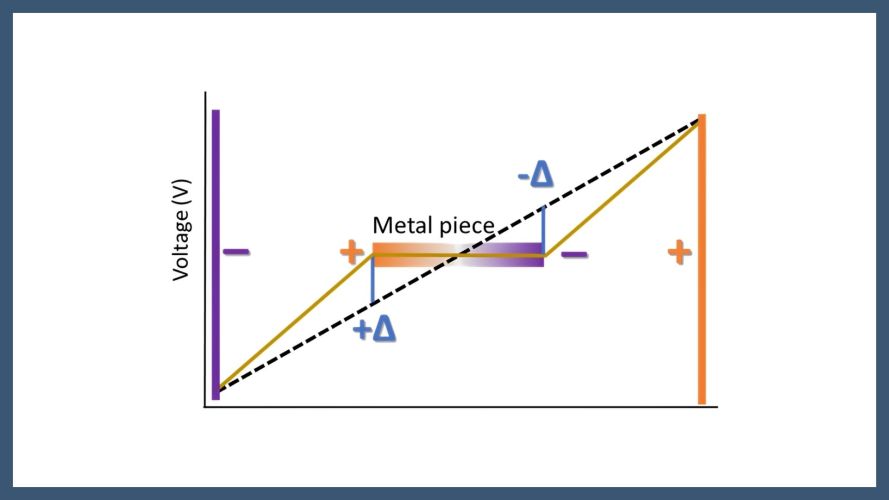
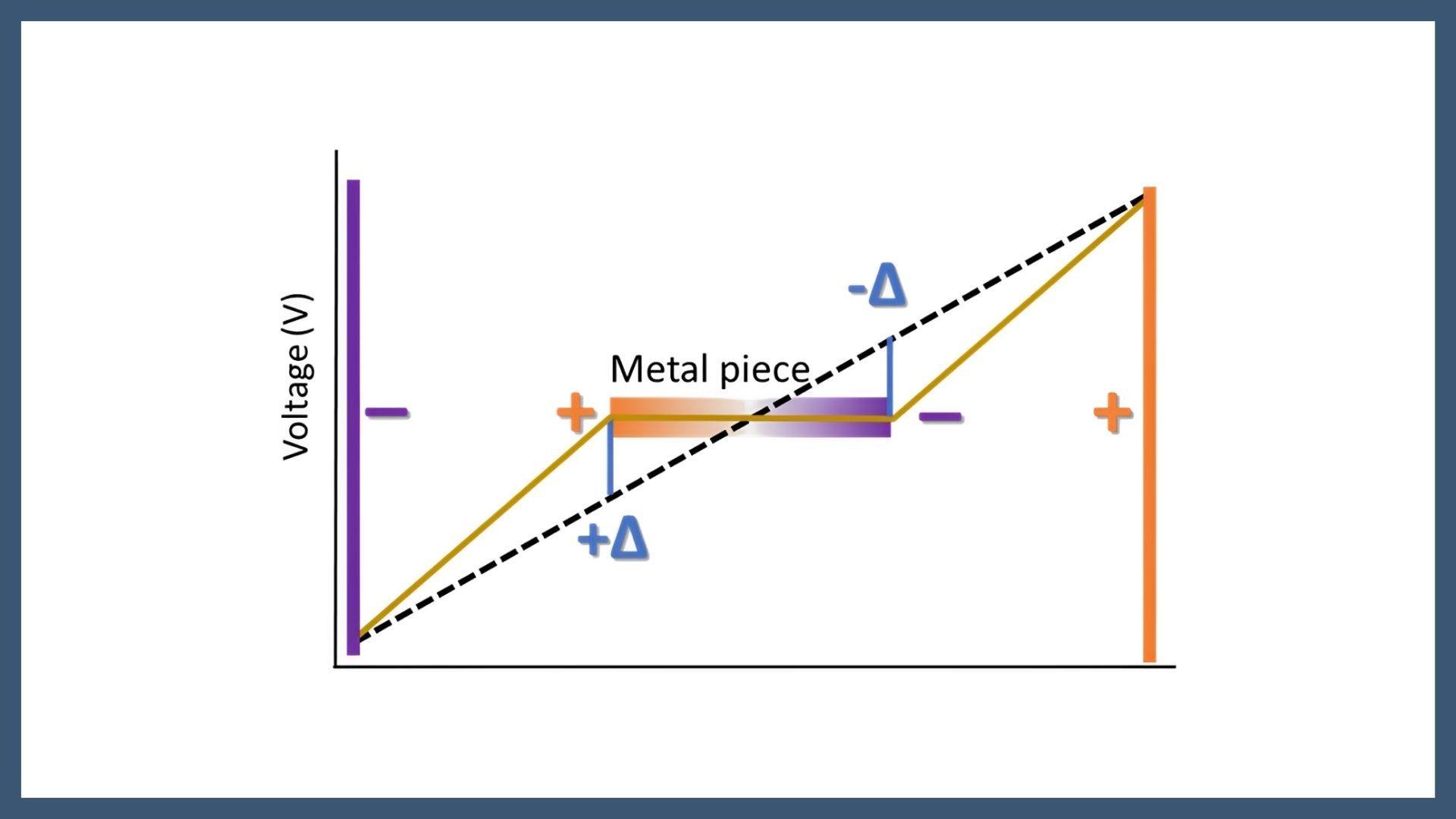
Beyond the development of new materials and systems for electrochemical energy storage, additional aspects may still be improved. The observed decrease in resistance when conducting materials are immersed in the electrolyte suggest a counterintuitive path to enhance cell performance. Tested for the first time in a Cu/Zn system, this works goes one step beyond in the use of induced wireless electrode poles, bipolar electrochemistry in batteries. An all soluble system like the symmetric Fe(CN)63-/ Fe(CN)64- cell is chosen as model, and it greatly benefits from the polarization of an unwired bipolar electrode immersed in the cell in specific configuration. The observed overpotentials are decreased up to 200 mV, with a significant decrease of cell impedance. The charge capacity for the same amount of redox species gets enhanced up to 4 times due to a recycling of the soluble species, that migrate from the cathode/anode to the adjacent pole of the bipolar electrode (anode and cathode respectively). The improvements in voltage, resistance and capacity have a remarkable impact on the evaluated differential power, which increases up to 45 % with respect to a non-bipolar system.
M4NRG Clean Energy
Spontaneous recharge, and overpotential reduction in symmetric Fe(CN)63-/ Fe(CN)64- batteries, using electrically induced effects and related bipolar electrochemistry
Mosqueda, M.; Bengoa, L. N.; Goni, S.; Casan-Pastor, N.
Electrochimica Acta, Volume 529, 2025, 146366
DOI: 10.1016/j.electacta.2025.146366

