


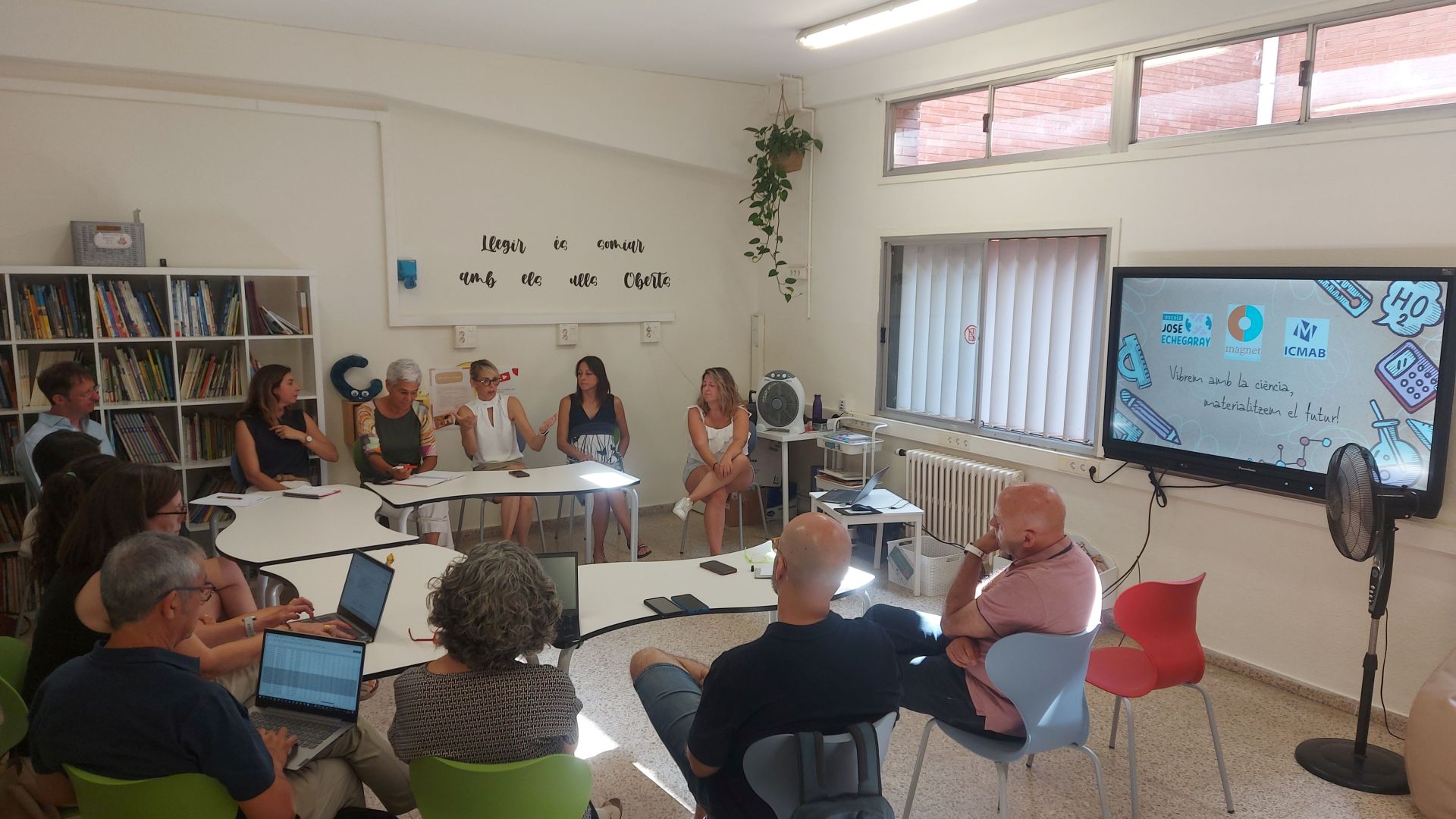
These final weeks of June and early July, after the 2024–2025 school year ends and before the holidays begin, are the perfect time to reflect on the year’s activities and prepare for the following one.
That is exactly what was done during the Magnet Alliance meeting between José Echegaray School and ICMAB, in a joint session with representatives from both institutions, the Catalan Department of Education, the Territorial Education Services, and the Martorell City Council. From ICMAB, our Director David Amabilino, and the Magnet project coordinator, Anna Crespi, attended the meeting. After an intense year filled with joint activities, the overall evaluation was very positive, with highly engaged program participants and a growing, more constructive and solid relationship. This closing session also served to discuss improvement actions for the coming year.
With a total duration of four years, the Magnet alliance with José Echegaray School is now at its halfway point. This ambitious project is running successfully thanks to the active involvement of several ICMAB researchers and technical staff, the school’s teaching team, the essential support of Conxita Márquez and Xavi Geis from the Bofill Foundation, and the coordination of Anna Crespi, the ICMAB project lead.
A Science fair on bioinspiration in materials
The students’ end-of-year celebration happened a couple of weeks before the adults’. For three days, the school was filled with a festive atmosphere. The fair showcased the work done by José Echegaray’s students and teachers, guided by ICMAB researchers, on this year’s theme: bioinspiration in materials. Students from preschool (I3) to sixth grade organized workshops around the material properties they studied during the year.
- The two I3 classes, the súperclosquituguis, explored material hardness, with Anna Crespi and Roberta Ceravola as mentors, and Guillem Vargas as co-mentor.
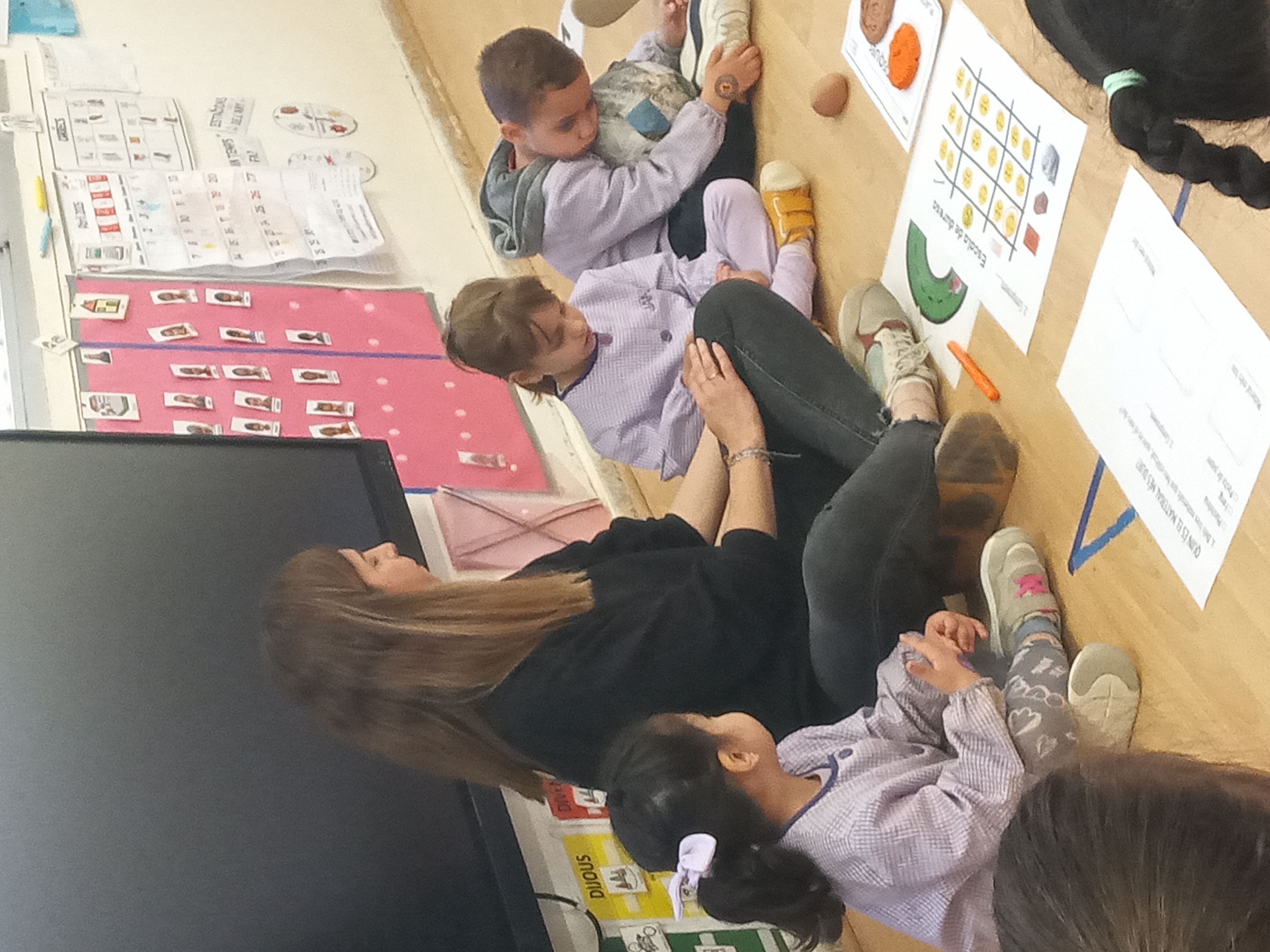 During a hardness experiment with I3 students
- The I4 classes, the lumimarins, focused on luminescence in the ocean, mentored by Roberta Ceravola and Anna Crespi, with Stefania Sandoval as co-mentor.
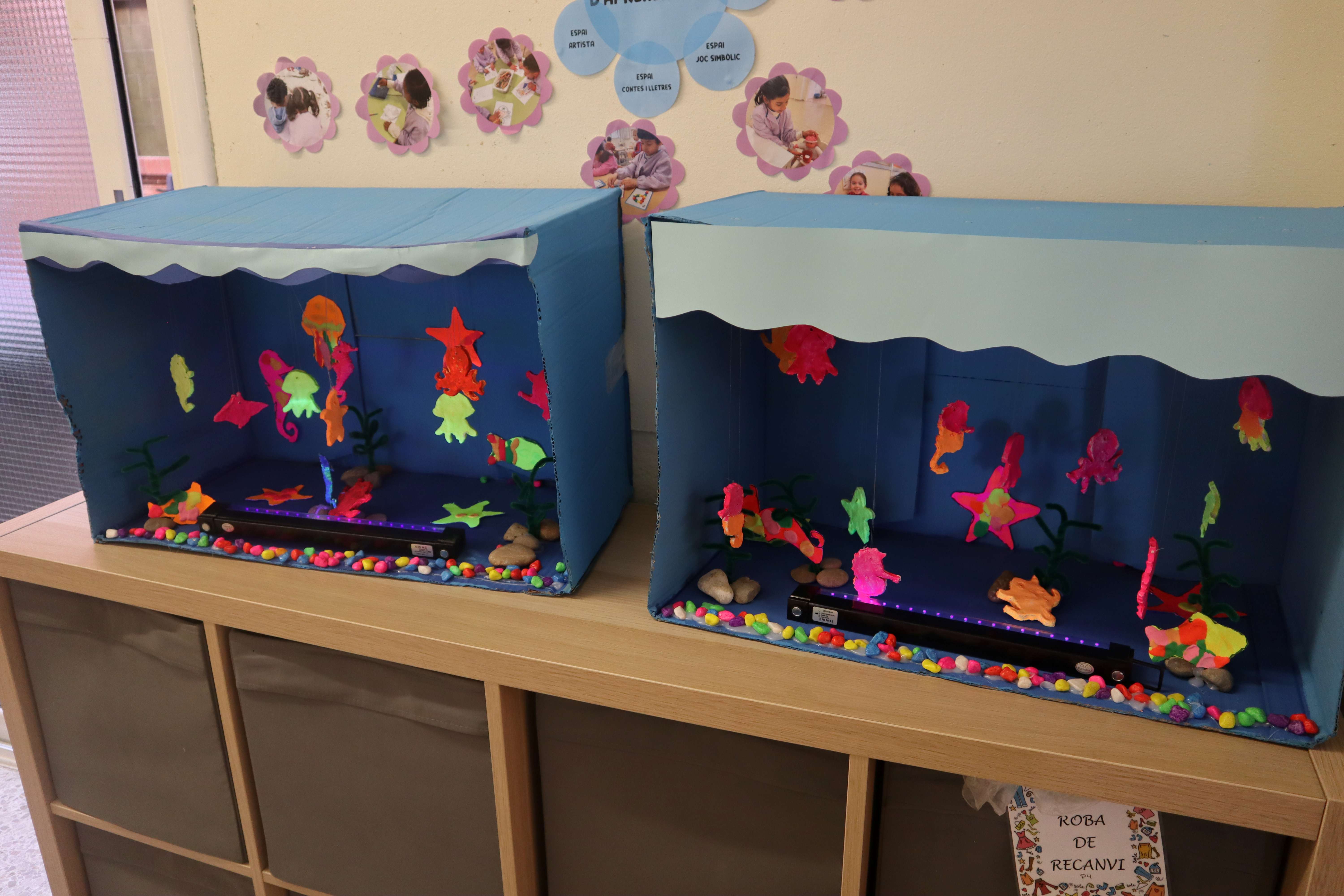 One of the results of the I4 students' work
- The I5 classes explored the magic of camouflage, with Roberta Ceravola and Anna Crespi as mentors and Anna Drou as co-mentor.
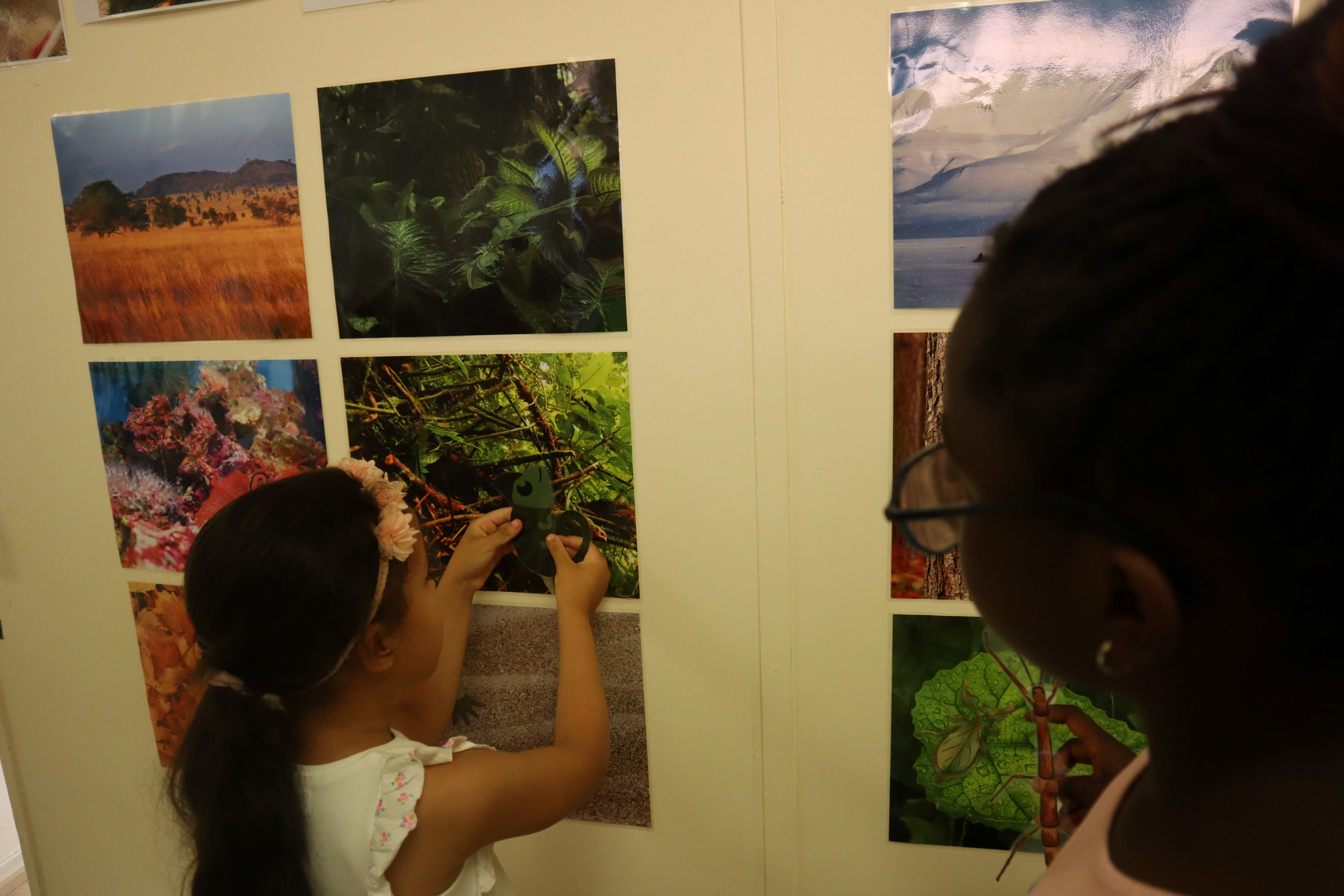
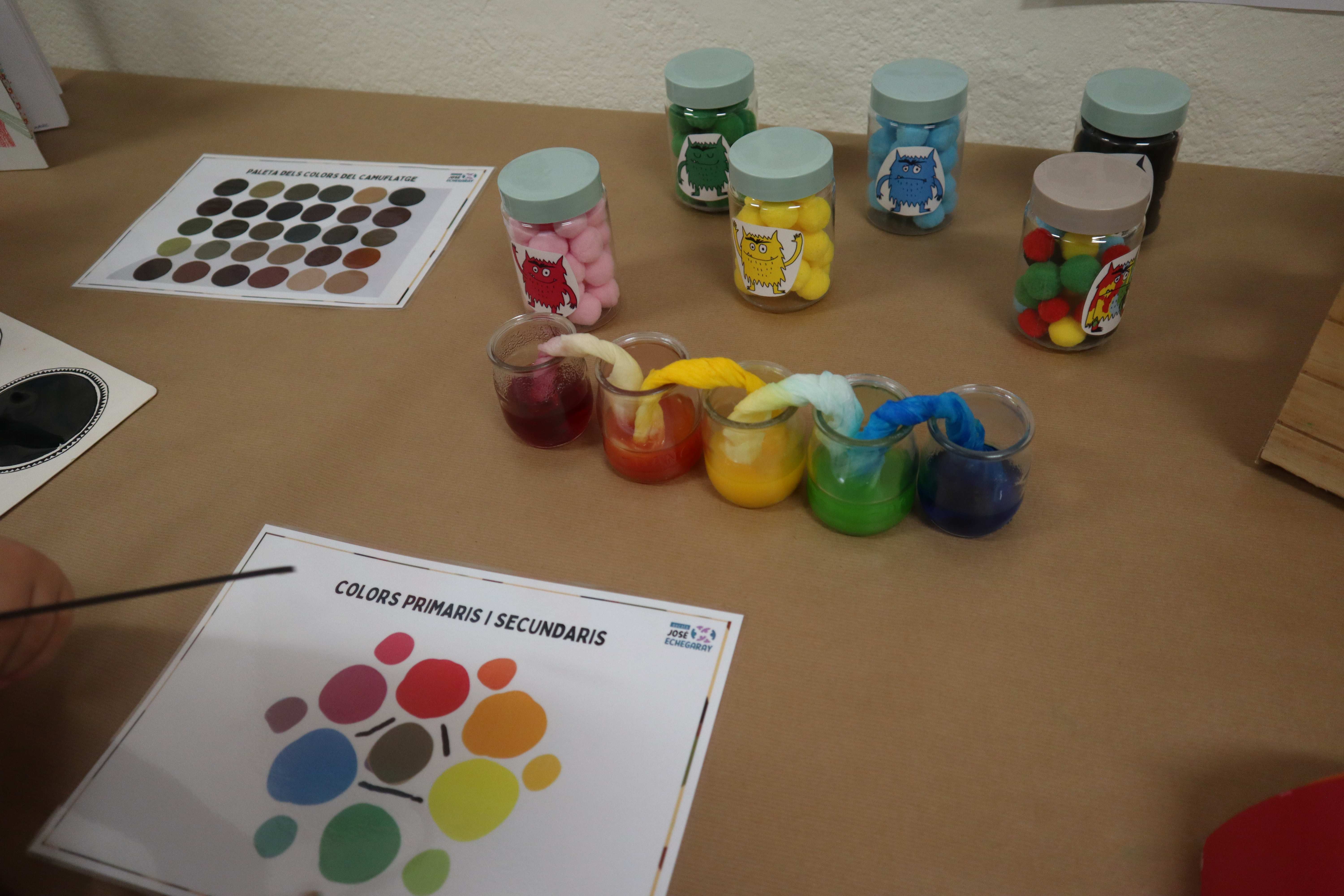 Activities on colours and camouflage by the I5 students
- First-grade students, the elastic frogs and strong ants, studied elasticity and strength, with Lluís Casabona and Alexandra Harbuzaru as mentors, and Alexandre Ponrouch and Raquel Gimeno as co-mentors.
- Second-grade students, the nature camouflaged and resilient spies, experimented with camouflage and resistance, with Esther Barrena and Alejandro Goñi as mentors, and Alex Ponrouch and Raquel Gimeno as co-mentors.
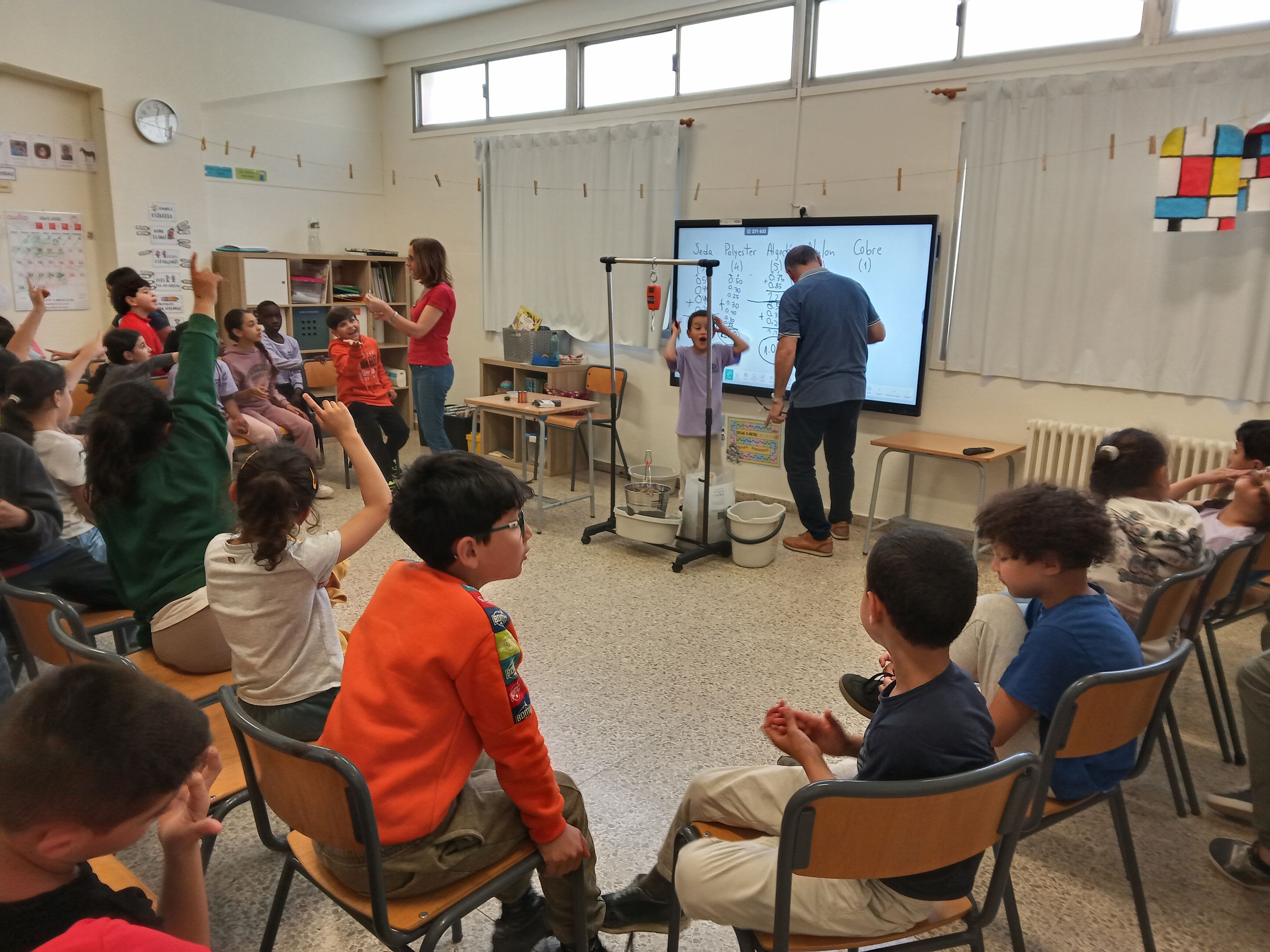 Second-grade students testing the resistance of different materials
- Third-grade students worked on elasticity with Judith Oró as mentor and David Amabilino as co-mentor.
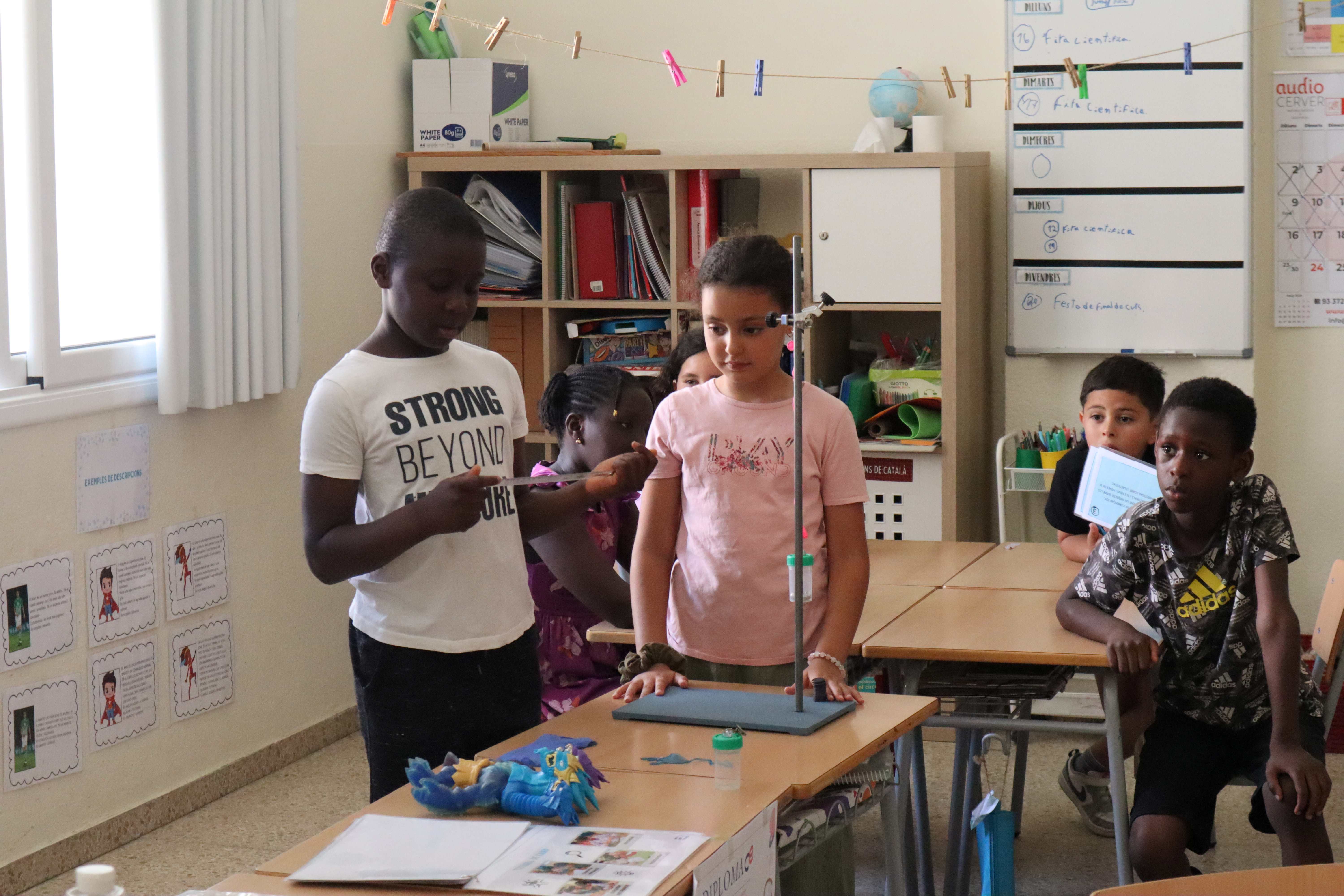 Third-grade students experimenting with different materials' elasticity
- Fourth-grade students, class A, the immortal jellyfish, studied regeneration with Anna Laromaine and her bacterial cellulose, supported by Anna Crespi and Judith Oró as mentors, and David Amabilino as co-mentor.
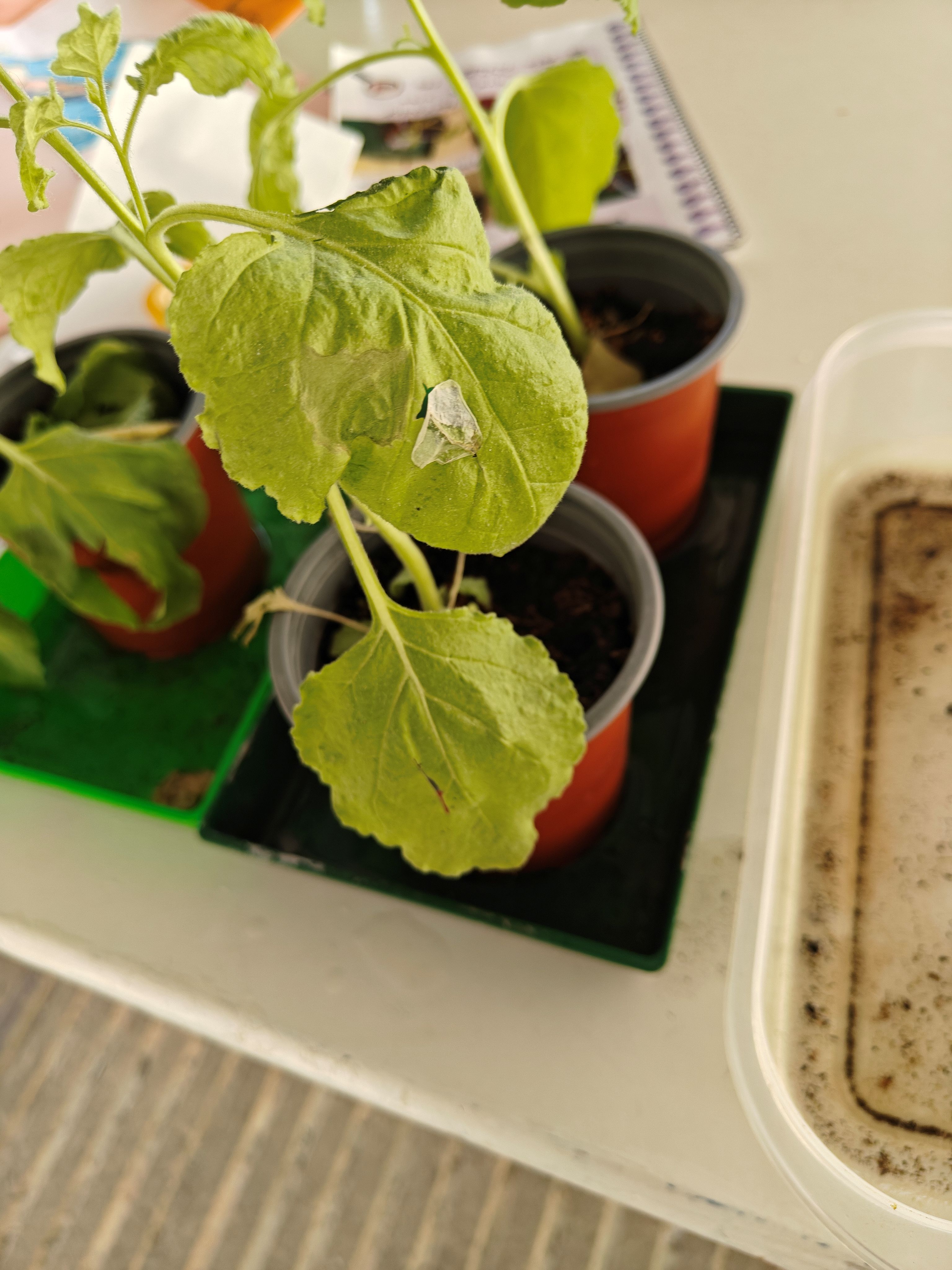 Testing bacterial cellulose in regenerating plant wounds.
- Fourth-grade students, class B, the resilient super-spiders, explored elasticity and strength, with Anna Laromaine and David Amabilino as co-mentor.
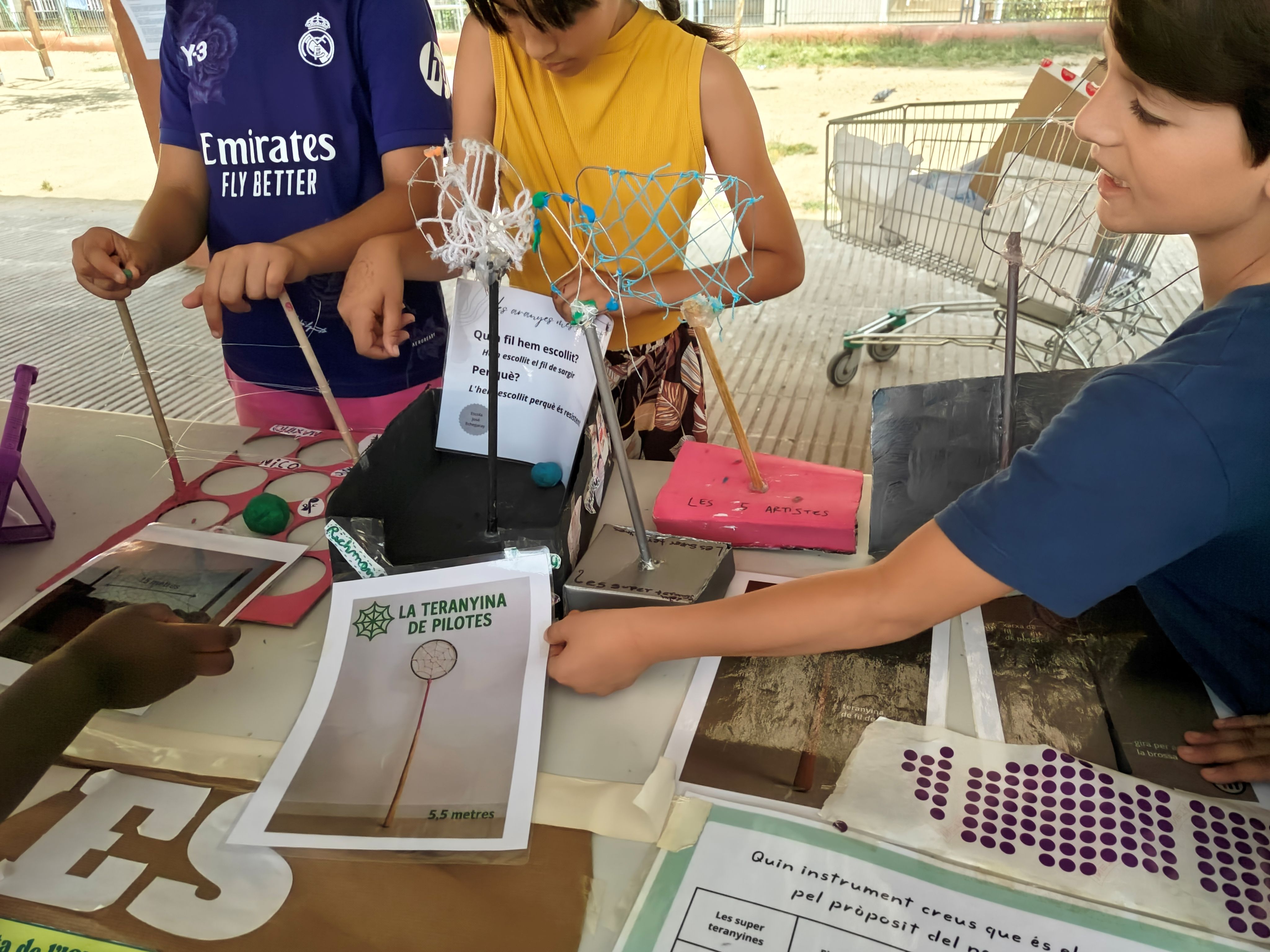 Fourth-grade students designing cobwebs with different materials
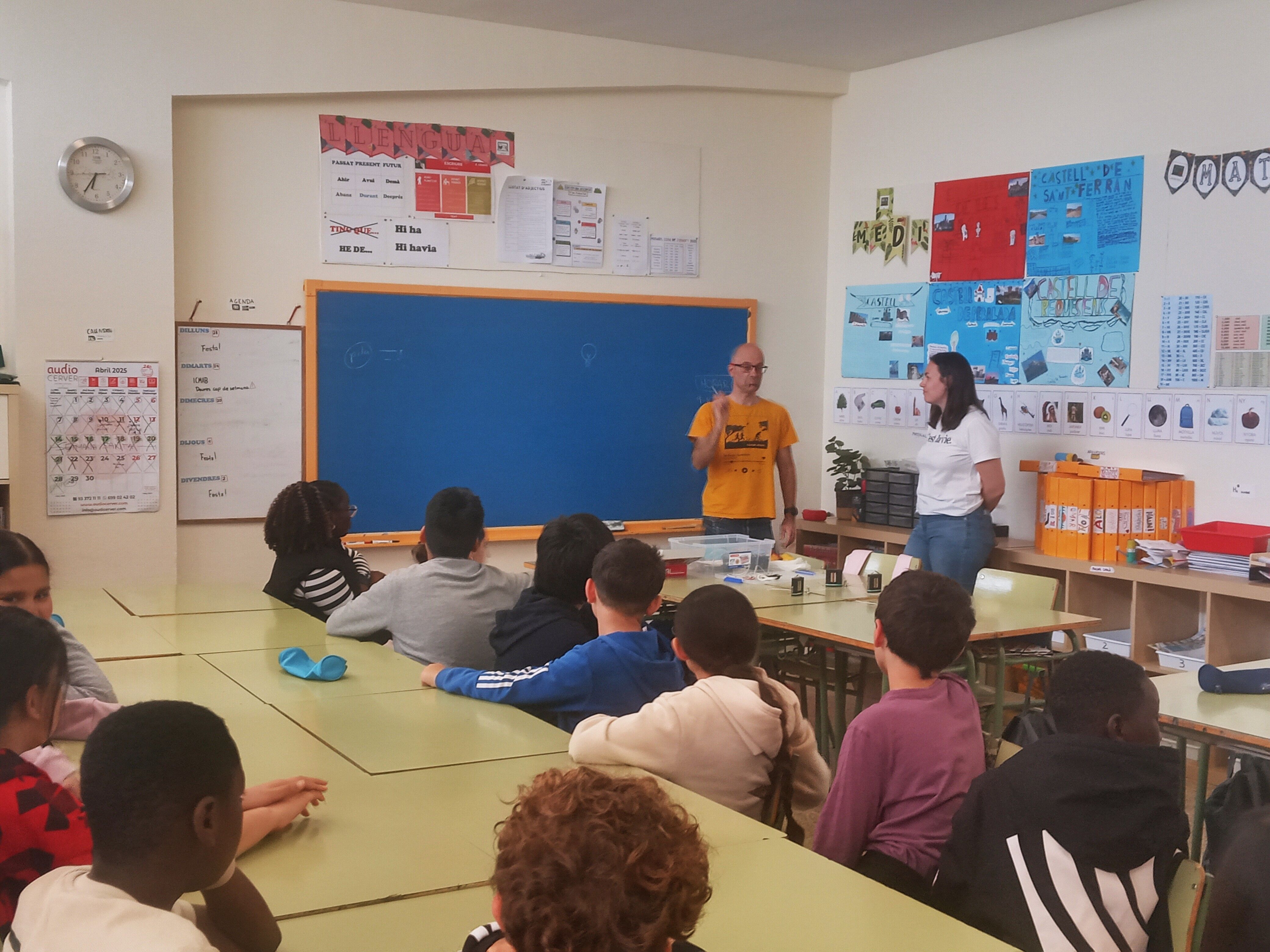
- Fifth-grade classes 5A and 5B, the Ximants and the Coolèctrics, worked on magnetism and conductivity with Bernat Bozzo and Carla Torras as mentors and Nico Dix and Martí Gich as co-mentors.
 Experimenting with lemon-based batteries with fifth-grade students
- Finally, sixth-grade students (6A and 6B), the Invisible Explorers and the Guardians of Force, explored light and force with Lluís Casabona, Alexandra Harbuzaru, and Alejandro Goñi.
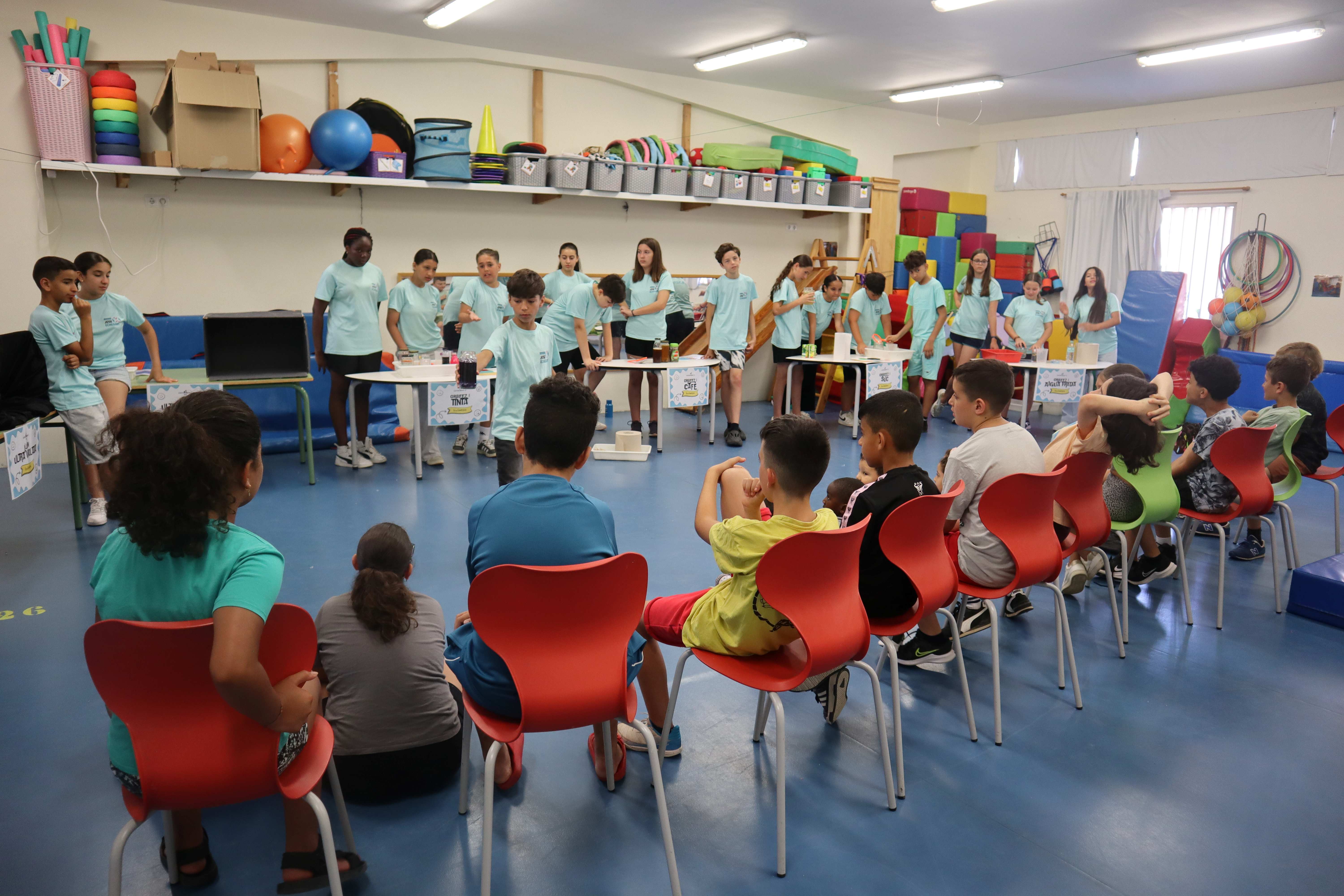 Sixth-grade-students showing the results of their experiments with Orbeez and different substances to other kids in school
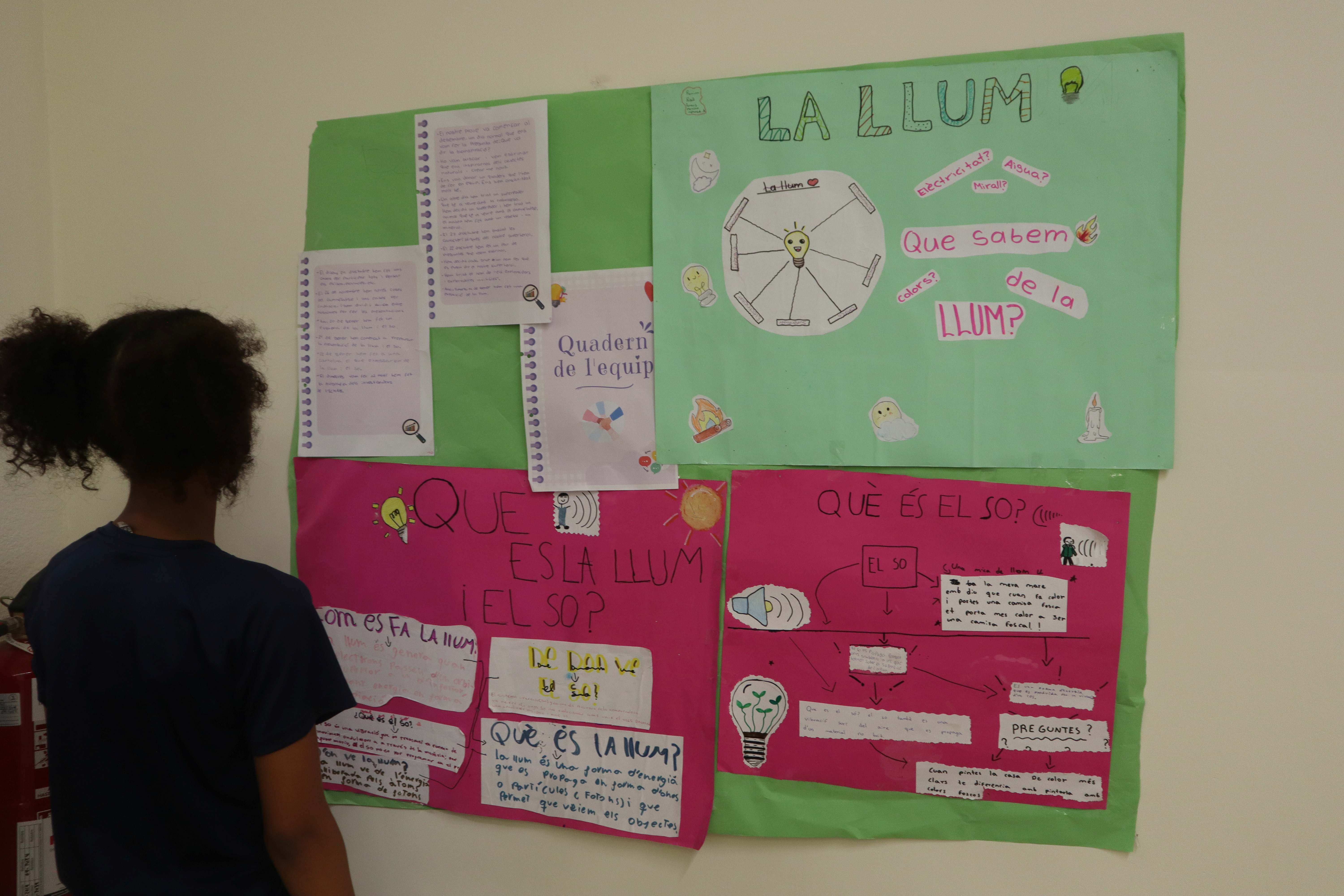 The sixth-grade students work with light previous to the Orbeez activity
A year of new projects: Joining the FAIG program and celebrating the European Researchers’ Night
This year, José Echegaray School and ICMAB also began participating in the FAIG program, which helped them integrate digital fabrication techniques into the scientific methodology they had already been practicing through the Magnet program.
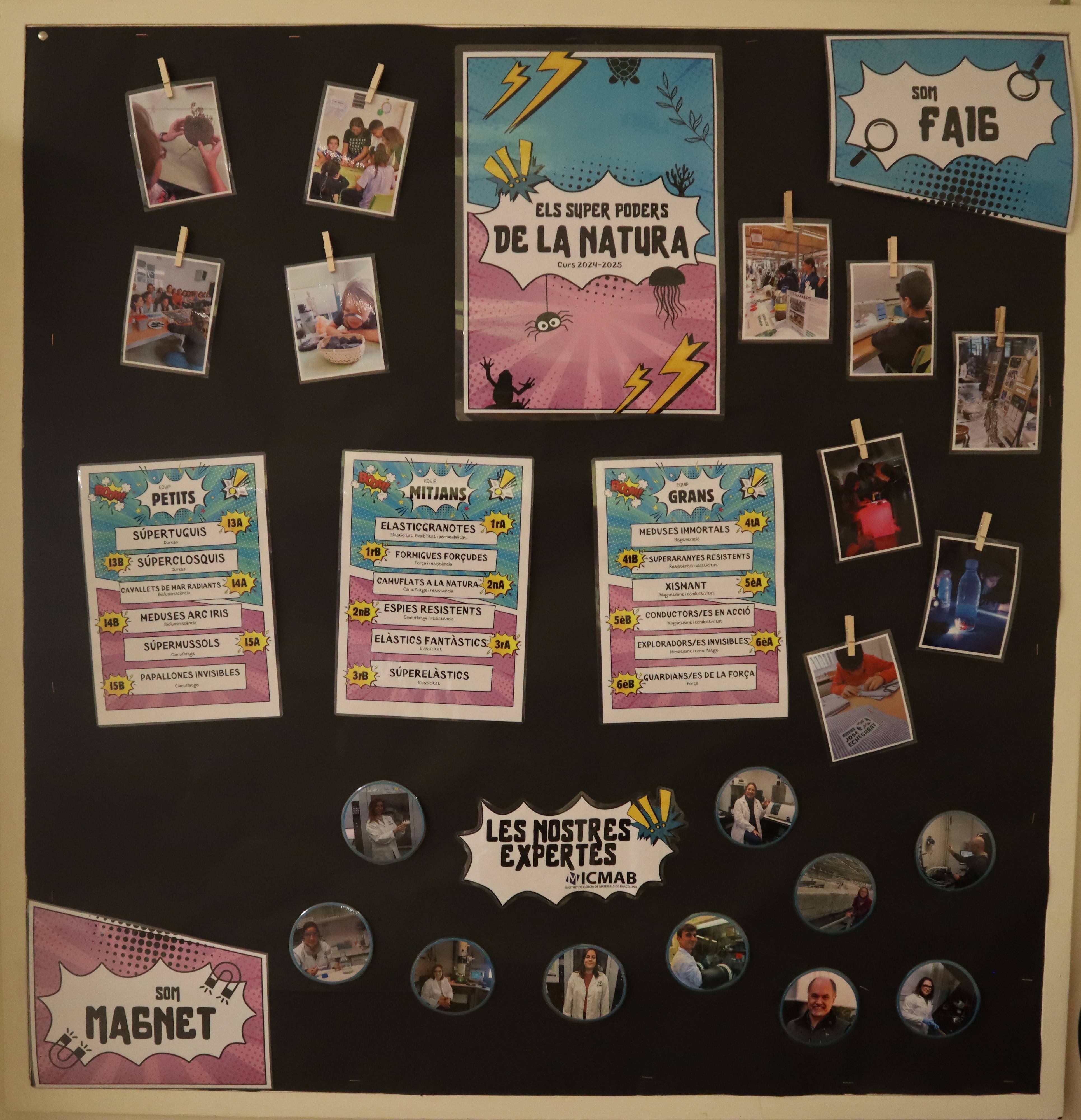 Mural at the entrance of José Echegaray School
Moreover, the school’s teaching team and ICMAB researchers organized a 2024 European Researchers’ Night event open to the entire Martorell community. It was a great success and served as a catalyst for all the activities carried out throughout the year.
What about next year?
September 2025 will mark the start of the third year of the Magnet program (course 2025-2026). After focusing on the carbon allotropes in the first year and bioinspiration in materials this year, we’ll soon find out what the new theme will be. The alliance continues to evolve, and the school is increasingly equipped with tools to apply the scientific method, stimulate curiosity, and engage students in seeking answers to their questions.
“A major achievement this year has been the assimilation of working methods and scientific knowledge,” says Anna Crespi. “That’s why we already have proposals from teachers for next year! We’re very happy to see the school taking the initiative while knowing they can count on us for whatever they need — that’s what makes the resulting activities more meaningful.”
More references:
L'escola José Echegaray de Martorell presenta el programa MAGNET, en aliança amb l'ICMAB-CSIC, amb l'objectiu de promoure la ciència entre l'alumnat (ICMAB, January 2024)
The students of the José Echegaray School interview the Chemistry Nobel Laureate Sir Fraser Stoddart (ICMAB, June 2023)
Nature inspires science, a collaboration by ICMAB and Escola José Echegaray (ICMAB, January 2025)
ICMAB celebrates the European Researchers' Night with the José Echegaray School in Martorell (ICMAB, October 2024)
