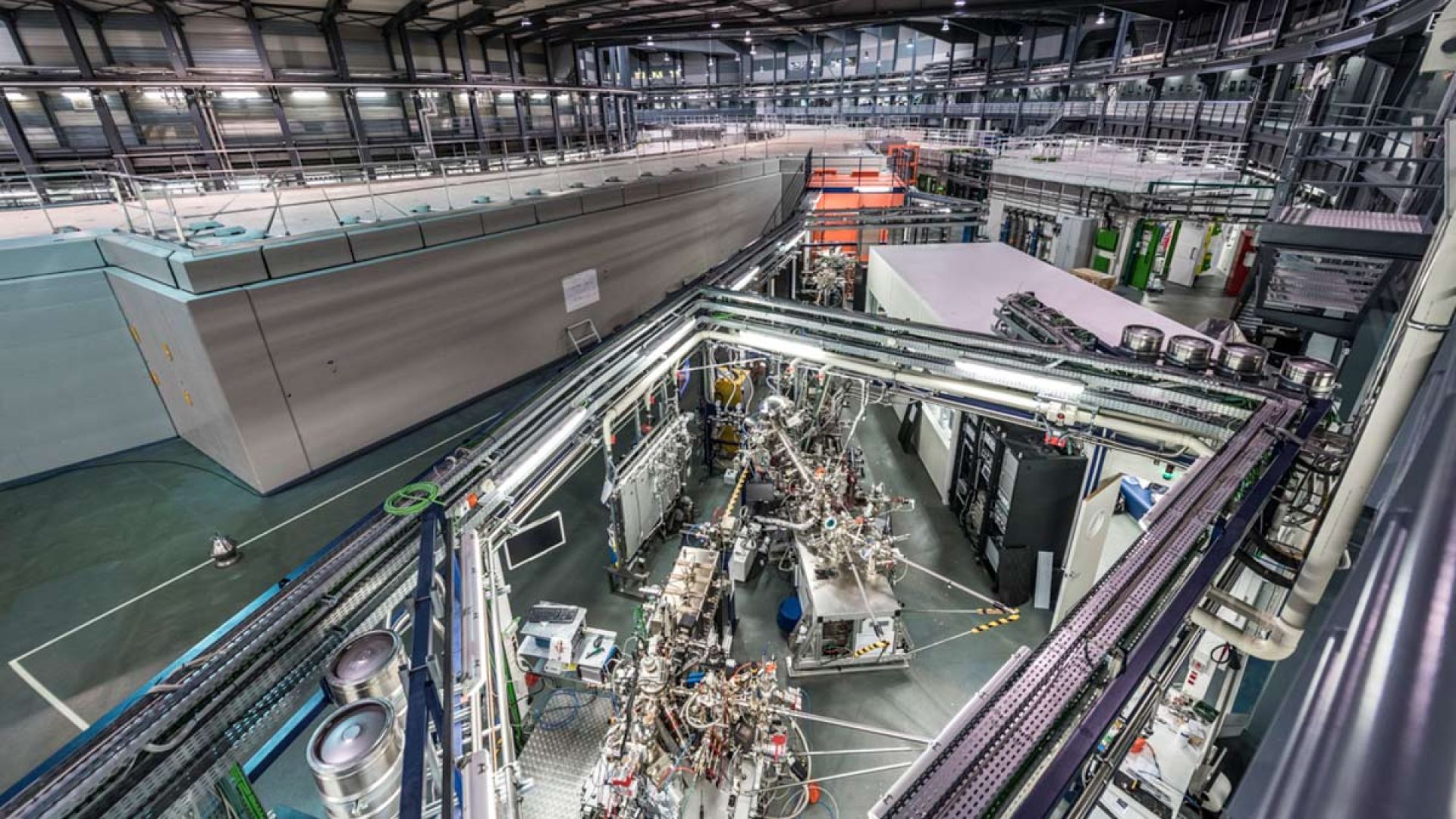
"Night transforms spaces. In the city, taxi lights illuminate the deserted streets, while in the laboratories of a synchrotron, X-ray beams interfere with samples."
This is how Daniel Martín's new article for the blog Ciencia ante el Espejo begins. He talks about science and cinema, about the film Night on Earth (1991, Jim Jarmusch), and about how research in large scientific facilities, such as the ALBA synchrotron, can also be the setting for fascinating stories. Because, when the majority of people sleeps, science is still up!
In the article, Daniel recalls his own experience using the ALBA Synchrotron, working a night-shift in a weekend in the NCD-SWEET line. He as well reflects on the big scientific biographies cinema (such as Oppenheimer, 2023, Cristopher Nolan), which he uses to make a proposal for future science films: 'to tell more realistic stories about the anonymous scientists and the challenges they face every day in laboratories, between experiments and long working hours'.
It is a very interesting lecture, and you can read it here!