


A new paper has been published in ACS Applied Materials & Interfaces:
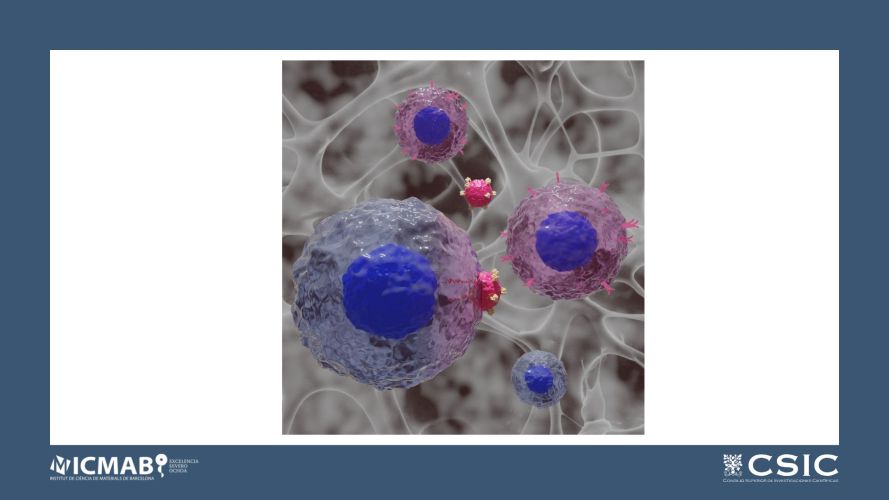
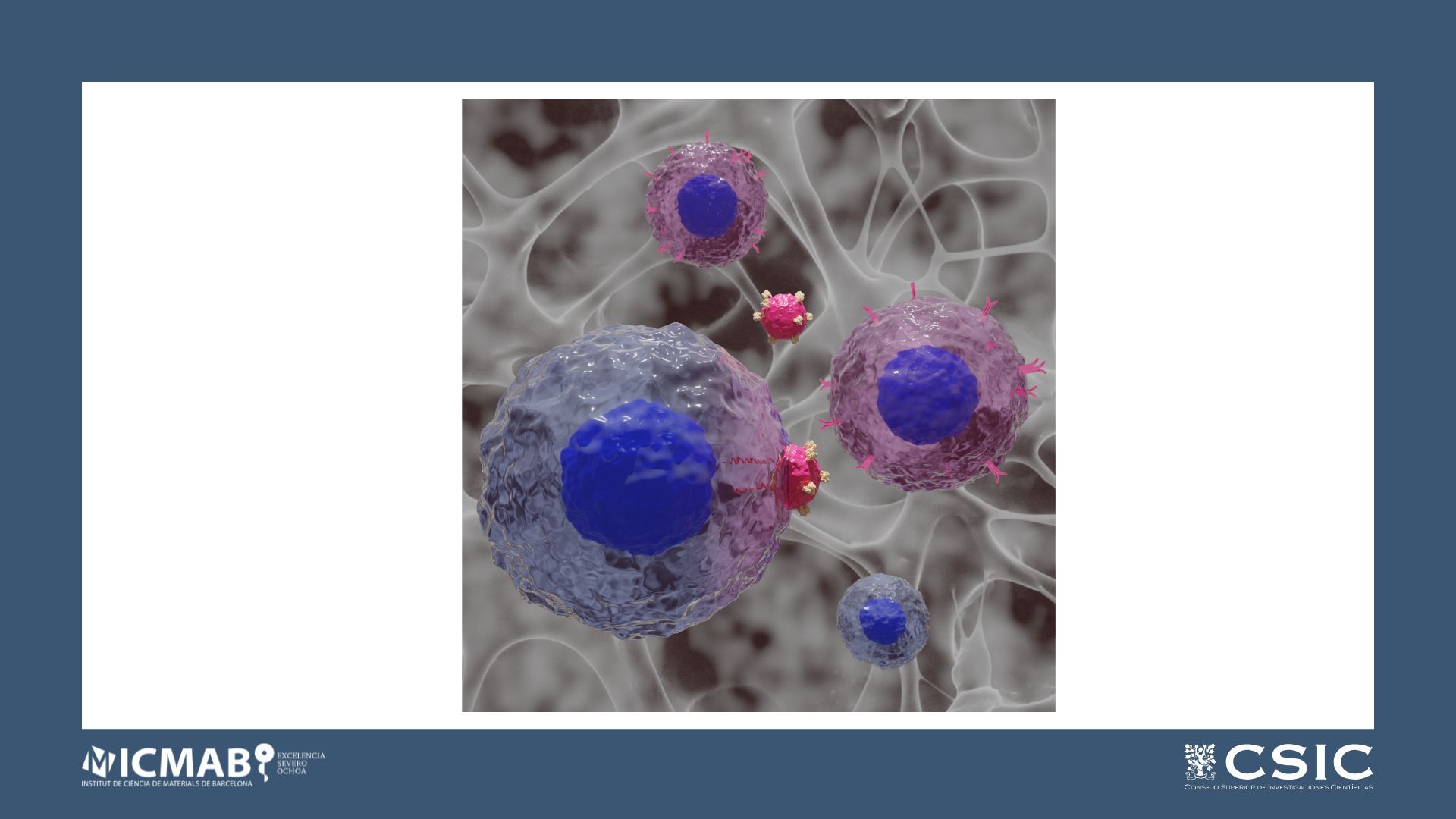
Chimeric antigen receptor (CAR) T therapy has shown unprecedented results in clinical practice, including long-term complete responses. One of the current challenges of CAR T therapy is to optimize its production in order to lower its cost. Currently, the in vivo activation of T cells by dendritic cells is replicated ex vivo using polymeric magnetic beads coated with antibodies to induce polyclonal T cell activation. However, current practice overlooks the importance of the complex environment that constitutes the lymph nodes, in which T cells activate and proliferate in vivo. Hydrogels are an ideal candidate material for mimicking the properties of natural tissues such as lymph nodes. In this study, key conditions of the composition, stiffness, and microarchitecture of hydrogels were experimentally and theoretically investigated to optimize primary human CAR T cell culture, focusing on CAR expression and proliferation. Poly(ethylene glycol)–heparin hydrogels featuring interconnected pores of 120 μm and an intermediate stiffness of 3.1 kPa were identified as the most suitable conditions for promoting CAR T cell expression and expansion. Specifically, these hydrogels increased the percentage of CAR+ cells by 50% and doubled the replication index compared to suspension cultures. In conclusion, these newly engineered hydrogels are an interesting tool to help improve CAR T cell manufacture and ultimately advance toward a broader clinical implementation of CAR T cell therapy.
M4HTH Smart Nanomedicine
Lymph-Node Inspired Hydrogels Enhance CAR Expression and Proliferation of CAR T Cells
Miquel Castellote-Borrell, Marc Domingo, Francesca Merlina, Huixia Lu, Salut Colell, Mireia Bachiller, Manel Juan, Sonia Guedan, Jordi Faraudo, Judith Guasch
ACS Appl. Mater. Interfaces 2025, 17, 11, 16548–16560
DOI: 10.1021/acsami.4c19942

