The aim of these awards is to recognize and promote the scientific and outreach work of researchers under the age of 40 who are active in the fields of chemistry and related disciplines, and who contribute to generating innovative and sustainable technological solutions to achieve circularity and climate neutrality goals.
The awards are divided into three categories:
- Futura, awarded for the best undergraduate academic record in chemistry or related fields
- Investiga, for the best scientific publication in any area of chemistry
- Innova-Miguel Burdeos, for the best project developed through a public-private collaboration in the field of sustainable chemistry
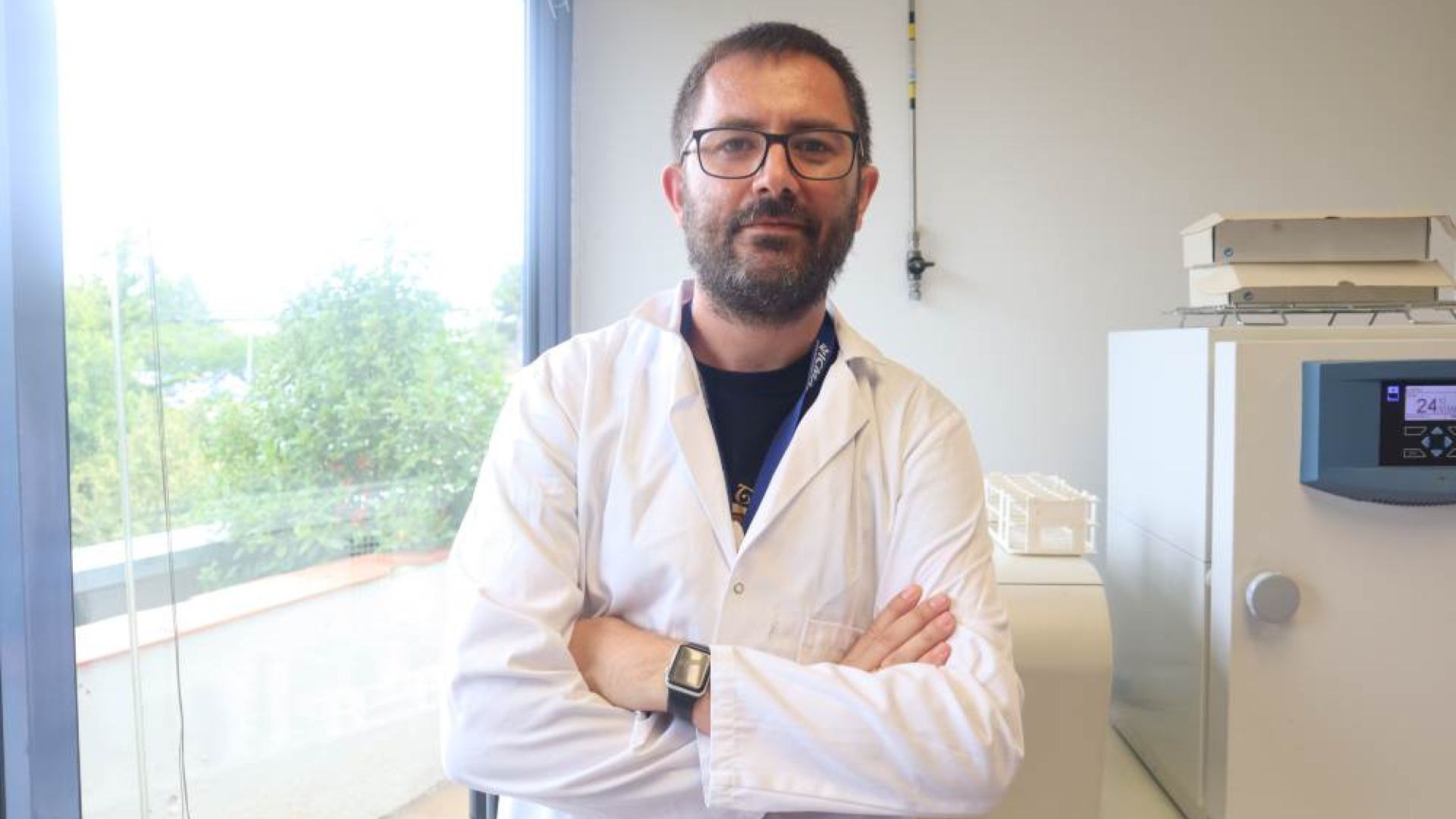
Juan Pellico, finalist in the INVESTIGA category
Juan Pellico, member of the NN group at ICMAB, has been recognised as one of the finalists in the INVESTIGA category for his paper In vivo real-time positron emission particle tracking (PEPT) and single particle PET published in Nature Nanotechnology. This work was developed at King's Colllege of London during his postdoctoral research.
The paper tackles positron emission particle tracking (PEPT), which enables 3D localization and tracking of single positron-emitting radiolabelled particles with high spatiotemporal resolution. This tecnique, though, translated to the biomedical imaging field has been limited due to the lack of methods to radiolabel biocompatible particles with sufficient specific activity and protocols to isolate a single particle in the sub-micrometre size range, below the threshold for capillary embolization.
In the paper, the authors report two key developments in this aspect: the synthesis and 68Ga-radiolabelling of homogeneous silica particles of 950 nm diameter with unprecedented specific activities (2.1 ± 1.4 kBq per particle), and the isolation and manipulation of a single particle. Combining these developments to perform in vivo PEPT and dynamic positron emission tomography (PET) imaging of a single radiolabelled sub-micrometre size particle using a pre-clinical positron emission tomography/computed tomography scanner, they opened possibilities for quantitative assessment of haemodynamics in vivo in real time, at the whole-body level using minimal amounts of injected radioactive dose and material.
Juan Pellico's short bio
Juan Pellico is a Ramón y Cajal researcher at ICMAB since 2025. He earned his PhD in Chemistry from Universidad Complutense de Madrid in 2016. After postdoctoral research at the CNIC’s Advanced Imaging Unit, he moved to the UK, holding positions at the University of Oxford and King’s College London, where he led projects on nanomedicine for medical imaging. His current research focuses on integrating advanced nanomaterials with radionuclides to develop next-generation imaging and therapeutic agents.
The jury and the applications
The jury of the SusChem 2025 awards, composed of distinguished professionals from the scientific, academic, and business sectors of Spanish chemistry—both public and private—was responsible for selecting the finalists. This year, over 70 high-quality applications were received across the three award categories, highlighting the remarkable talent of the new generation of researchers in Spain.
This year’s expert jury included Carmen Cartagena (ANQUE), Belén Yélamos (CEDQ), Antonio Chica (CSIC), Beatriz Fernández (Expoquimia), Cristina González (Feique), Gabriel González (OEPM), Sonia Guri (SusChem Spain), and Jesús Torrecilla (Tecnalia Ventures). During their deliberations, the jury highlighted the high level of the submitted applications and expressed confidence in a bright future for chemistry in Spain.
Reference Article
In vivo real-time positron emission particle tracking (PEPT) and single particle PETJuan Pellico, Laurence Vass, Amaia Carrascal-Miniño, Francis Man, Jana Kim, Kavitha Sunassee, David Parker, Philip J. Blower, Paul K. Marsden & Rafael T. M. de Rosales
Nature Nanotechnology volume 19, pages 668–676 (2024)
https://doi.org/10.1038/s41565-023-01589-8
Read more
Premios SusChem Jóvenes Investigadores Químicos. SusChem-España 2025