


A new paper has been published in the Journal of Power Sources:
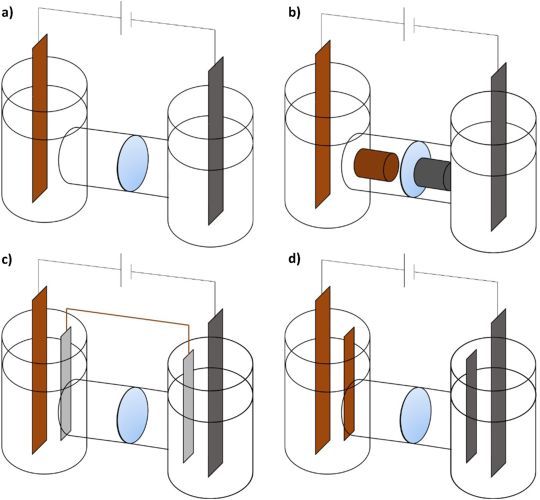
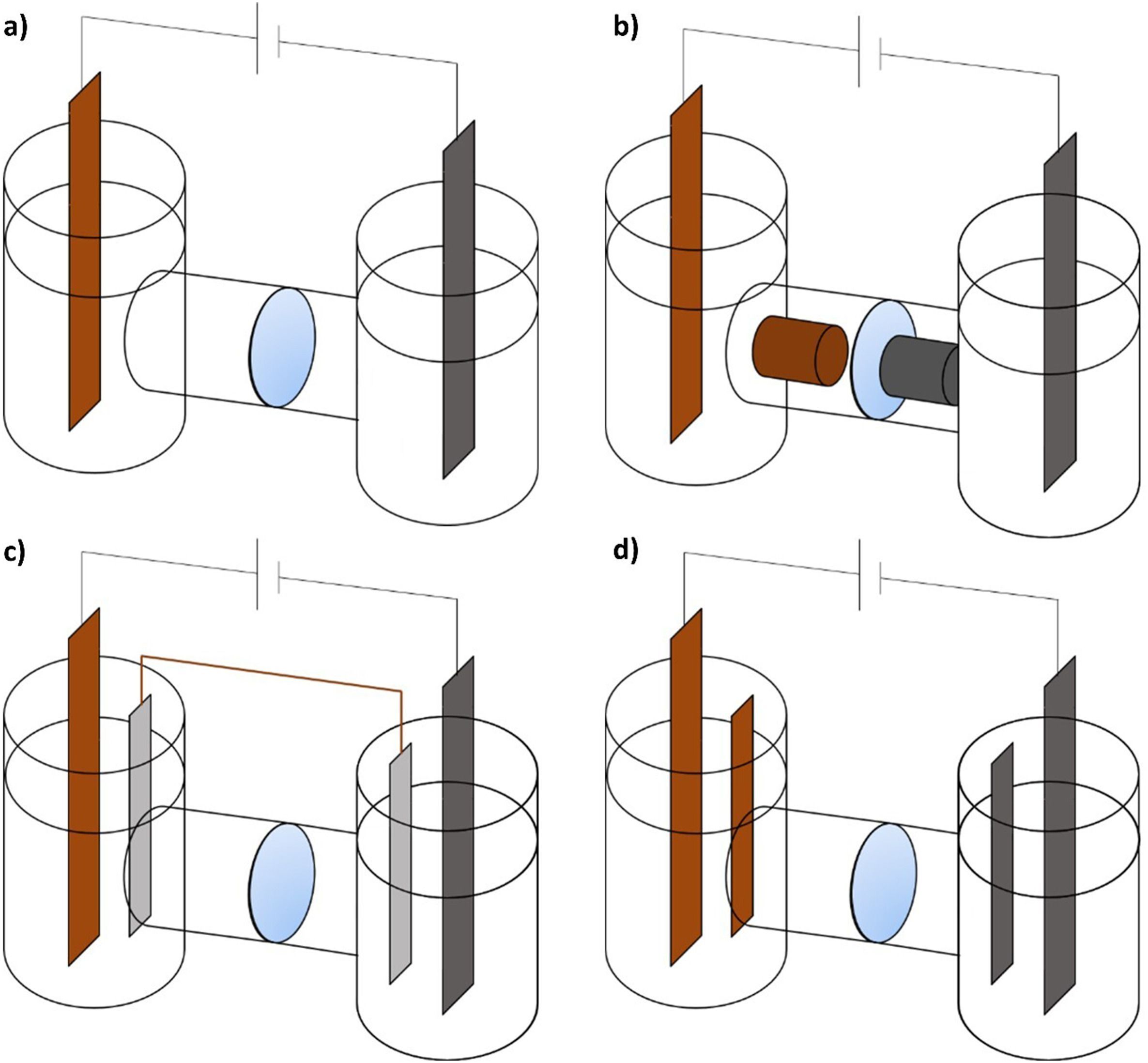
Immersed conducting materials in an electrolyte undergo polarization in presence of electric fields, resulting in a dipole where opposite poles of the material become an anode and cathode, where electrochemical reactions may occur at sufficiently induced potentials. Such induction phenomena lower significantly the resistance of the electrochemical cell. This work shows how in a Cu/Zn battery, it also yields lower overpotentials, and enhanced charge capacity and power, especially at high currents. The outcome of such bipolar electrochemistry, depends on the specific configuration of the bipolar electrodes within the electric field, and the possible reactions at the bipolar electrode for the specific redox system chosen. For the largest induced dipole tested, specific capacities may be increased by 40 % and volumetric capacities may double. It is of great significance that, with appropriate configurations, the capacity of a specific battery may be greatly enhanced, allowing also to reduce the number of cells in a stack to maintain the same performance.
M4NRG Clean Energy
Induced electric wireless effects on energy storage: Bipolar electrochemistry effects on Cu/Zn batteries performance
Marc Mosqueda Dorado, Cristina Flox, L.N. Bengoa , Sandro Goñi, Nieves Casan-Pastor
Volume 624, 30 December 2024, 235459

