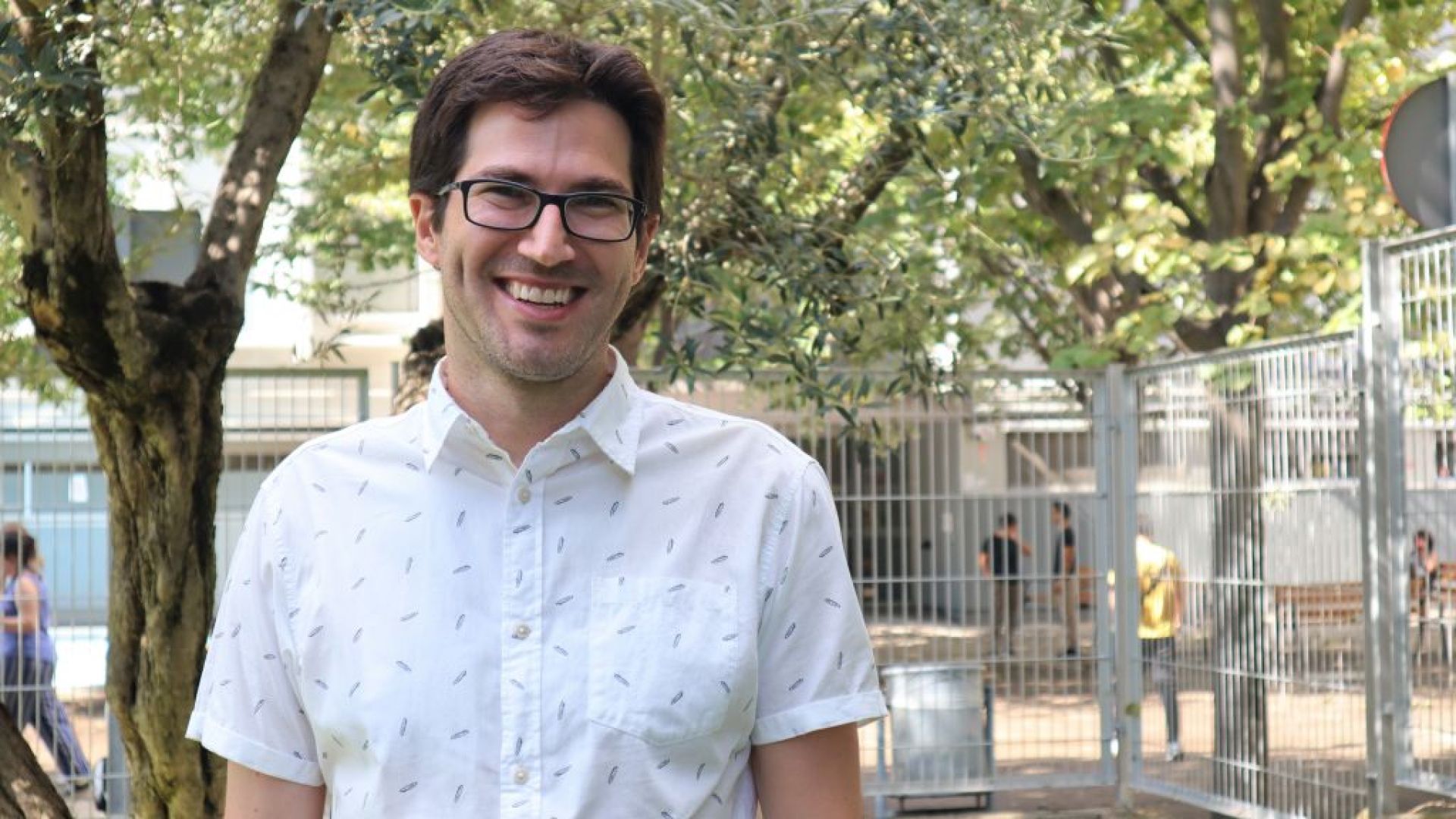
Glioblastoma is one of the most common and aggressive brain cancers. It also has a very difficult treatment due to its critic localisation and invasive nature. Now, Gerard Tobías-Rossell, from the Institute of Materials Science of Barcelona (ICMAB-CSIC), has obtained a European Research Council Proof of Concept Grant (ERC PoC) to try a new way to fight this cancer using gold nanoparticles. The project’s name is GRAPE.
“GRAPE is a project that aims at optimising the precision and personalisation of the therapy for glioblastoma patients. It combines proton therapy with gold nanoparticles,” says Tobías-Rossell. Gold enhances the effect of conventional therapies, and his team aims to adapt nanoparticles that had been previously developed by his research group (NanoCIM) to fight tumours with difficult prognosis.
The main objective now is finding a way for these gold-covered nanoparticles to get internalised exclusively by cancer cells, and no other healthy body part. That way, they will be able to check that they actually amplify the proton therapy effect in real-body conditions. “Improving the treatment to this cancer would be a great step forward to improving its survival rate, as well as the quality of life of patients”, says Tobías-Rossell, because “it would reduce the administered dose to patients and its secondary effects.”
Even though these nanoparticles are being developed with glioblastoma in mind, they are so versatile that they could be modified to fight other hard-to-treat cancers.
The NEST project as a base
ERC PoC grants are only given to researchers with a previous frontier research ERC grant, which can lead to up to three PoC in later stages.
GRAPE is built upon the NEST Project, which was founded by an ERC Consolidator Grant in 2017. NEST focused on the preparation of radioactive nanomaterials for the diagnosis and treatment of cancer. It developed a base platform that turned out to be so extremely versatile that it brought three PoC projects after it. GRAPE is the third.
Download the ICMAB press release in CAT, ESP, ENG
More information about this ERC Call
More news: