


A new paper has been published in the Journal of Physical Chemistry C:
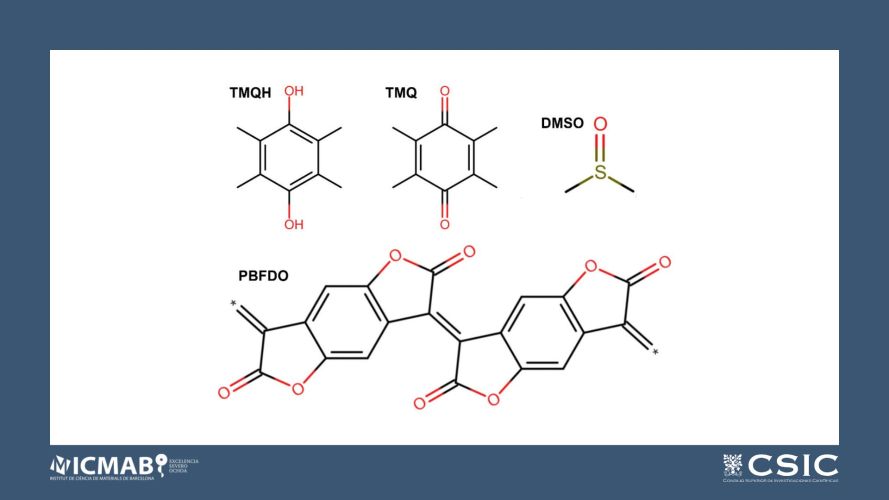
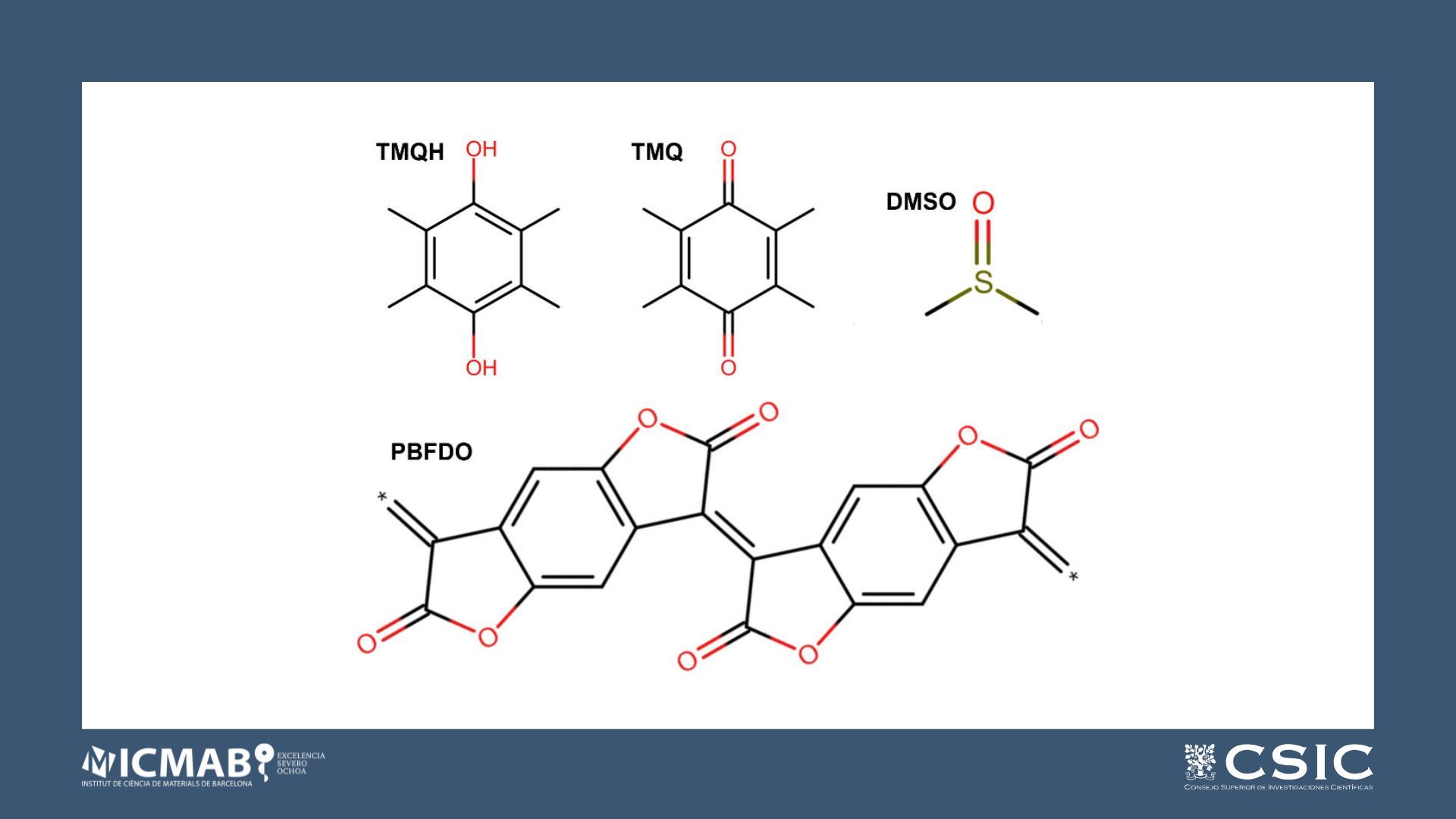
Poly(benzodifurandione) (PBFDO) has emerged as a promising n-type conductive polymer (n-CP) for organic electronic applications, particularly in thermoelectrics (TE), due to its high doping efficiency and environmental stability. Unlike most high-performance p-type polymers, high-efficiency n-CPs are limited, posing a bottleneck in the TE module performance. In this study, we use first-principles electronic structure calculations to investigate the thermodynamic conditions that favor n-doping in PBFDO, focusing on the role of the temperature, chain length, and doping concentration. We compute the change in Gibbs free energy, ΔG, upon doping and explore how it varies with temperature and polymer chain length. Our results show that doping becomes more thermodynamically favorable at lower temperatures and in longer chains, with a strong dependence of ΔG on the doping level emerging as chain length increases. Notably, PBFDO can achieve favorable doping levels across various chain lengths and temperatures, with specific doping thresholds identified for different molecular weights.
These findings suggest that lower synthesis temperatures could lead to more heavily doped, higher-conductivity PBFDO, and that chain length significantly influences achievable doping efficiency. This work provides insights for optimizing PBFDO doping strategies to enhance its performance in TE applications, bridging a key gap in organic semiconductor research.
M4NRG Clean Energy
Doping Efficiency of Poly(benzodifurandione) from First Principles
Paolo S. Floris, Igor Zozoulenko & Riccardo Rurali
J. Phys. Chem. C 2025, 129, 9, 4354–4357
DOI: 10.1021/acs.jpcc.4c07765

