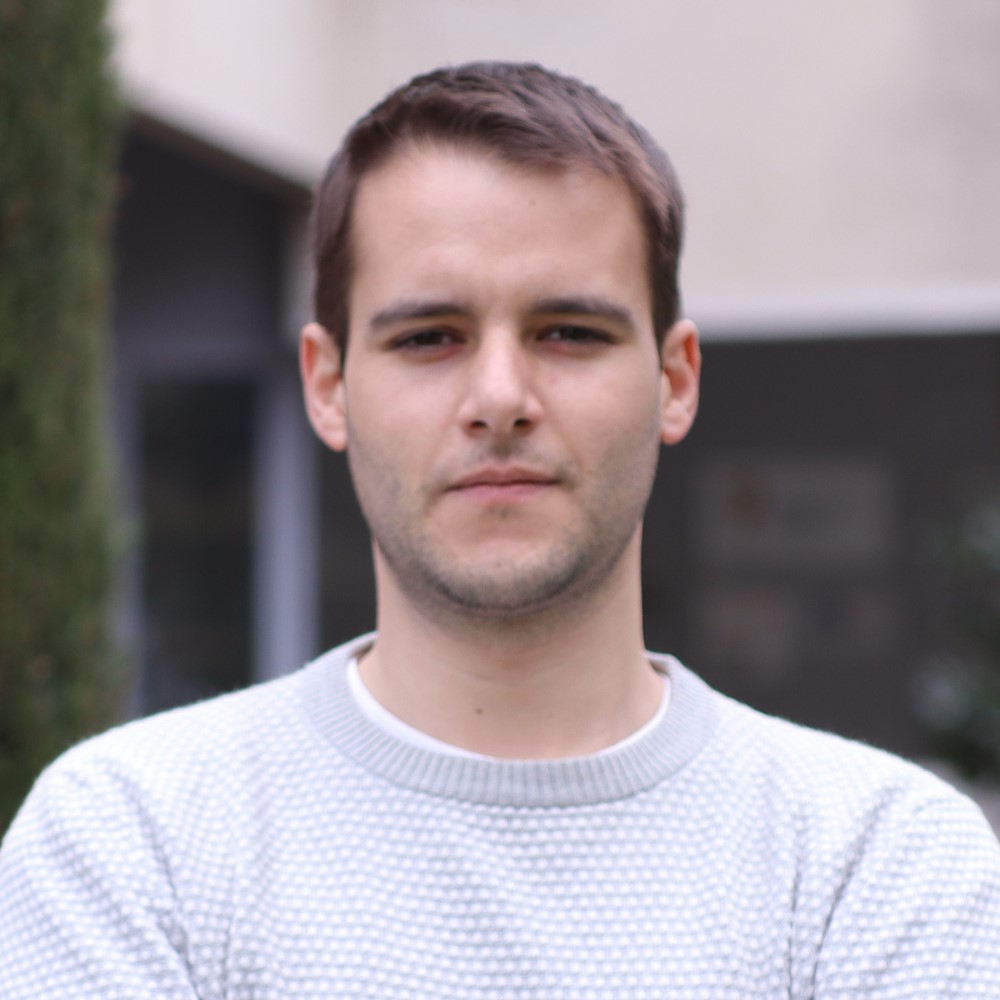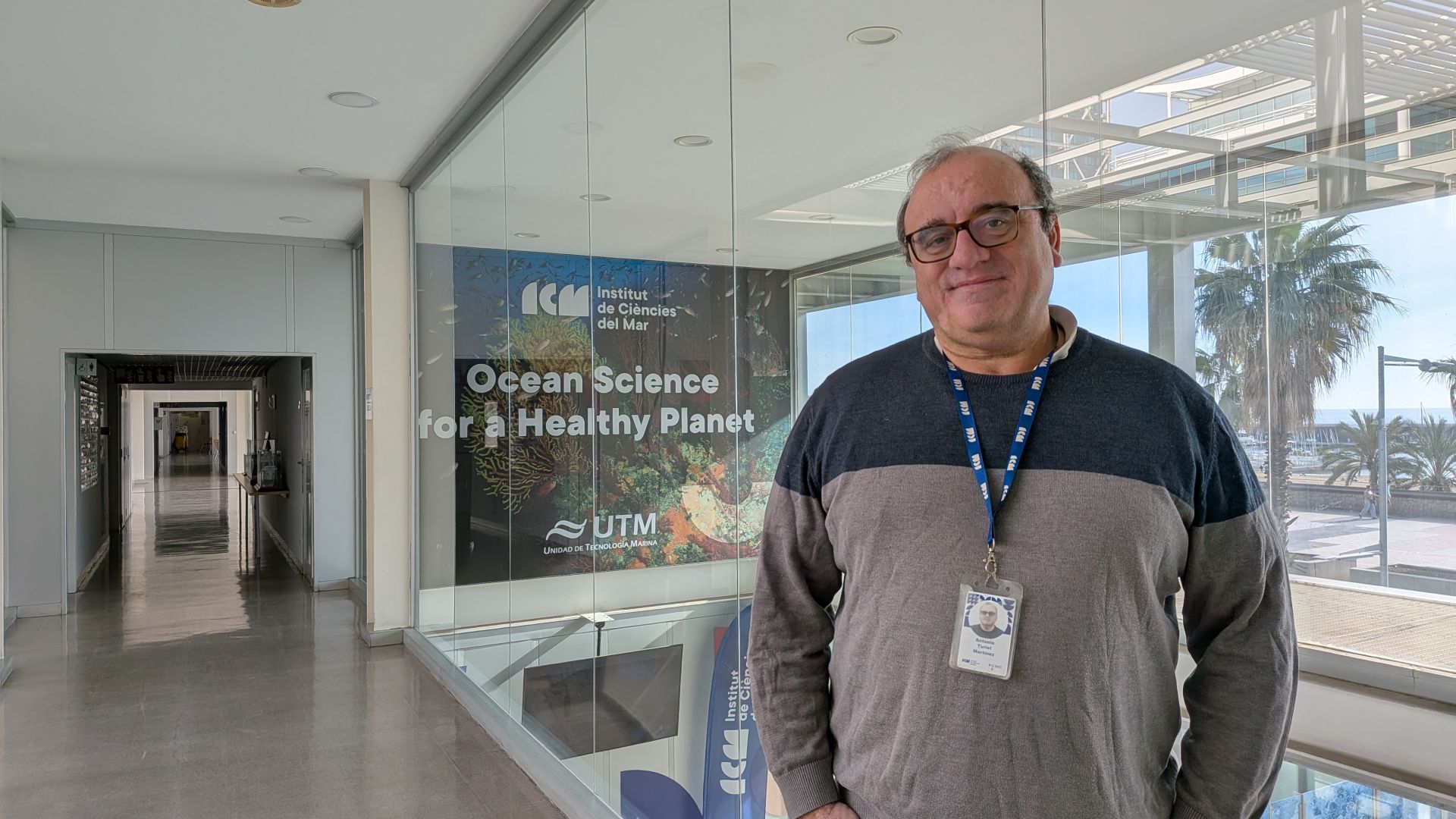
Last year, the researcher Antonio Turiel, a scientist at the Institute of Marine Sciences (ICM-CSIC) and one of the most recognised voices in the analysis of the energy and climate crisis, visited the ICMAB invited by the Sustainability Committee. In his talk The sustainability crisis of the XXIst Century, Turiel presented recent data on the overshooting of planetary boundaries and the acceleration of multiple environmental, social and economic crises.
Time was short and many questions were left unanswered. For this reason, we met with him again. This interview gathers and expands on some of the questions that remained open after his talk.
Almost a year ago you came to the ICMAB to give a talk. You showed tough data...
Yes, now they are worse. One change compared to the talk in June is that we have already exceeded another of the nine planetary boundaries. At that time we knew we had crossed six of the nine planetary boundaries, now we know we have crossed a seventh. Fantastic... Mind we cannot cross any!
During the talk you spoke about a phase change that becomes apparent around 2014. Do you think it is a point of no return?
At the planetary level, there are many points of no return, both climatic and ecosystem related. The collapse of the AMOC, the destruction of the Amazon, the melting of parts of Antarctica, and one can trigger others. There is not just one.
The change in 2014 is not so much in the Earth system as in the human system. It has to do with a radical change in Chinese industrial policy. For decades, China emitted large quantities of sulphur dioxide by burning coal without control. These aerosols cooled the planet because they reflected solar radiation. When they reduced these emissions, the atmosphere was cleaned and the real effect of greenhouse gases was revealed. Satellites clearly show a jump in the planetary radiative balance from 2014 onwards. Since then, warming has been about four times faster. In addition, shortly afterwards an El Niño developed and that is also part of the faster warming effect.
Does this place us in a very serious short term scenario?
Yes. We are heading towards two degrees of global warming by the middle of the next decade. In the Iberian Peninsula, that means more. Right now, with one and a half degrees globally, here we are already close to 2.7. With two global degrees we will be talking about summer temperatures of 50 degrees in some areas. That is incompatible with human life.
Some people expressed that, beyond the diagnosis, they missed proposals for solutions...
I know this one...
Yes? What do you propose or what do you imagine?
Here there are two important things. The solution is known by all of us, we all know it. Another thing is that we do not want to apply it.
But first I want to make something clear. When you describe that something is not working properly, that does not mean that you have the solution. You do not even have the moral obligation to have the solution. It seems that bad news cannot be given and that if you expose a problem you must have a solution. What makes me more capable than anyone else of finding a solution to a problem that is societal?
I am a physicist. I can tell you, look, this is working in this way, this is going wrong. Now, the changes that need to be made are social. I am not more qualified than anyone else. Obviously, I have my opinions, I can argue them, but I do not have to have the solution.
"We will be the first species to go extinct because it is not economically convenient for us not to do so"
In any case, we all know the solution. The problem is that we do not want to apply it: stop emissions. Stop burning fossil fuels. And we do not do it because of the economic consequences, we care more about maintaining the economic system than about our lives and the lives of our children. We will be the first species to go extinct because it is not economically convenient for us not to do so.
We all accept that we cannot question the economic system and that should make us see to what extent we are conditioned and to what extent we are coerced by something that we know is dysfunctional. We do not really have enough freedom of expression, because if we say what we really think, we screw it up. We know that we are facing problems.
The things I remember hearing when I started talking about these problems were, you are going to get into trouble. I did not understand it: telling the truth is getting into trouble? Obviously, it should not be like that. As scientists, what we have to do is seek the truth and serve society. Precisely stealing this discourse from society, this debate, I think is the worst service we can do to society. We have to talk about it and we have to look for solutions together. Besides, I would never trust much a person arrogant enough to claim they have the only solution.
And how do you deal with all this? Does it generate eco anxiety?
No. I already went through my grief many years ago. When I started doing outreach I already intuited the consequences of what is happening. Obviously, I am concerned, especially for my children, who have their whole lives ahead of them. But I do not have eco anxiety because I have purpose. That is why I give talks, travel and insist. I believe we can still change things.
I have faith that really, thorugh the force of talking and discussing and practising these debates, I can make changes. But I think that in the end the changes are not so much technical as social, it is a very important change in the social structure. It is not about inventing a new machine or distributing an energy source that does not exist: what we have to do is change the way we consume, that is all.
Technically it is not that difficult, the problem is that there will be people who will oppose it, but we all know that deep down it is what has to be done.
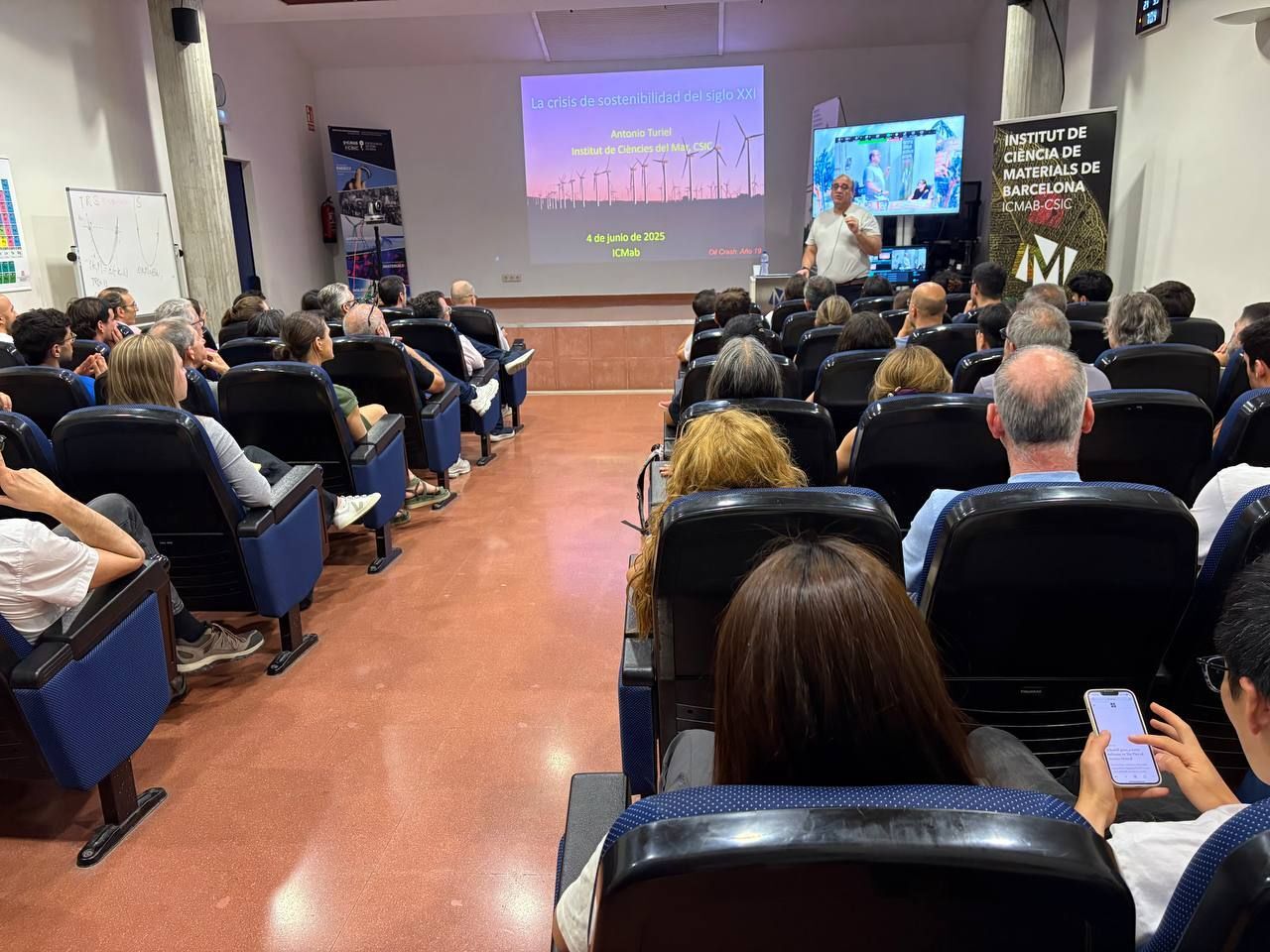
Antonio Turiel during the talk he gave at the ICMAB last June 4 2025 | ICMAB
When we talk about degrowth, what scale are we really talking about?
The key problem is speed.
To be sustainable, the average energy consumption per person should be about 450 watts. In Catalonia we are at around 4,200. We consume between nine and ten times more than what is sustainable. The change is technically feasible, with renewable networks we could reach that level and it would be sustainable.
The problem is that, knowing the personal, political and social cost involved in making the changes, I do not think we have that much time. We are starting to talk about the fact that the summers ten years from now in many parts of Spain and Portugal will be unbearable.
We do not have much time. The rest of this decade will be very complicated, the next five years will be very complicated, and I think that by the middle of the following decade many things will have changed radically by force.
Some people said they found it hard to imagine a degrowth future that is not sad...
What is it that really defines your quality of life?
The things that really define quality of life are adequate food, adequate climate control and having decent housing, which in Barcelona is increasingly difficult. Then also having an adequate job that does not break your body and obviously having good healthcare, good education for your children, these are the things that define the bulk of your quality of life.
Taking a trip to Japan can be curious, it can be interesting. It is not the thing that contributes most to your quality of life. You realise which things contribute to your quality of life when things happen like during last 28th of April when there was a blackout. Then you realise what is really important in your life, you realise what you can lose.
It is also important to get out of this consumerist discourse. Having three meals a day is not the same as travelling to Japan. If we look at the things that really serve to define quality of life, it can be achieved while maintaining it with much less energy, and that does not mean having a boring life. And you can have many things, you can have the internet and you can have a lot of things.
Consuming much less energy than is currently consumed implies a very radical change in society and also implies changing the focus of companies, companies cannot be focused on the pursuit of increasing profits every year. Many of the problems we have are associated with planned obsolescence. This implies a waste of resources, a waste of materials.
"You will not be able to avoid the problem of resource scarcity, this is something that will come given to you from outside"
Is degrowth an option?
People do not visualise this idea of degrowth and the first reason why they do not visualise it is because they think it is optional. People think it is a choice and it is not. If tomorrow there is a revolution or a civil war in Nigeria or in Saudi Arabia here we will have problems with the supply of petrol and diesel. They will not ask you if it suits you badly, do you understand?
You will not be able to avoid the problem of resource scarcity, this is something that will come given to you from outside. Things will be missing, we cannot avoid it, the question is how we adapt when we talk about degrowth. We are looking for ways to maintain the standard of living by adapting to energy and material decline and to an increasingly messed up environmental situation, which will come given to us, this is not a choice, you will have this whether you like it or not. Adapt to it.
The degrowth proposal is how we adapt. Let us do it in a democratic way, let us try to maintain the standard of living. This is the real proposal of degrowth.
Some expressed hope that science would find solutions to the problems you raise.
This is part of what is called the myth of progress, which is something that in sociology is very well analysed and which is one of the founding myths of capitalism. It is the idea that human beings always overcome all problems and that we always sell inevitable progress until we reach the stars.
It is only from the beginning basically of the first industrial revolution, in the Enlightenment, when this myth begins that no, that we always inevitably get better. Science is an important part of the myth of progress.
Most people think that during the twentieth century science freed us from limits, but it is the opposite: it has marked them for us
Most people think that during the twentieth century science freed us from limits, but it is the opposite: it has marked them for us. During the twentieth century we discovered that there is a speed limit, the speed of light, we discovered Heisenberg’s uncertainty principle, we discovered the problems of ecosystem balances, of the possibility of collapse,... That is, we found a series of limits that are insurmountable.
Science has allowed us to do many things but at the same time it has found barriers that we can never cross, such as the principles of thermodynamics: you will not create energy and you will never have perfect energy efficiency.
Science sometimes says that things are limited. It is the discourse of capitalism, it is a cultural discourse that says this vision of science solves everything. And no, it is not true.
How would you encourage people who are not very sensitised to get involved?
When this affects your daily life, you get involved. What do you think of RENFE? Now that everything is going badly people realise that maybe a change has to be made. Regarding these trains not working, a large part of the problem is that there is no investment, but there are also the climatic conditions, which accentuate the amount of money that has to be invested in maintenance of everything.
People start to feel addressed when it is affecting them in their daily lives. If you start to have supply problems such as there are, for example, with medicines, in Spain and in many European and world countries due to lack of chemical reagents, due to the rising cost of supply chains, etc.
The best way for people to feel involved is to tell them: have you thought about how life has to be lived in the coming years? I think people have to be confronted with the consequences of what we are doing. It takes some time, but in the end people end up feeling addressed because they are seeing that everything is going to hell.
Also deep down it is a process of grief. People have to understand that all the expectations they have of life are moving away and that things have to change. At the same time, however, those most incapable of going through this process of grief are the people who are most favoured by the system. They do not see it because it does not affect them, and they will not see it until the day it affects them.
At the ICMAB we have a sustainability commission, but it is much newer than yours, the one at the ICM. What could we learn from you?
Sustainability affects both how we do research and what we research. This includes things such as reducing flights, prioritising trains, going to fewer conferences or holding more telematic meetings.
In our case, going out to sea with a ship is very energy intensive. This forces us to optimise campaigns so that several teams take advantage of the same outing and to make the most of each campaign. It is not always easy, there is still room for improvement.
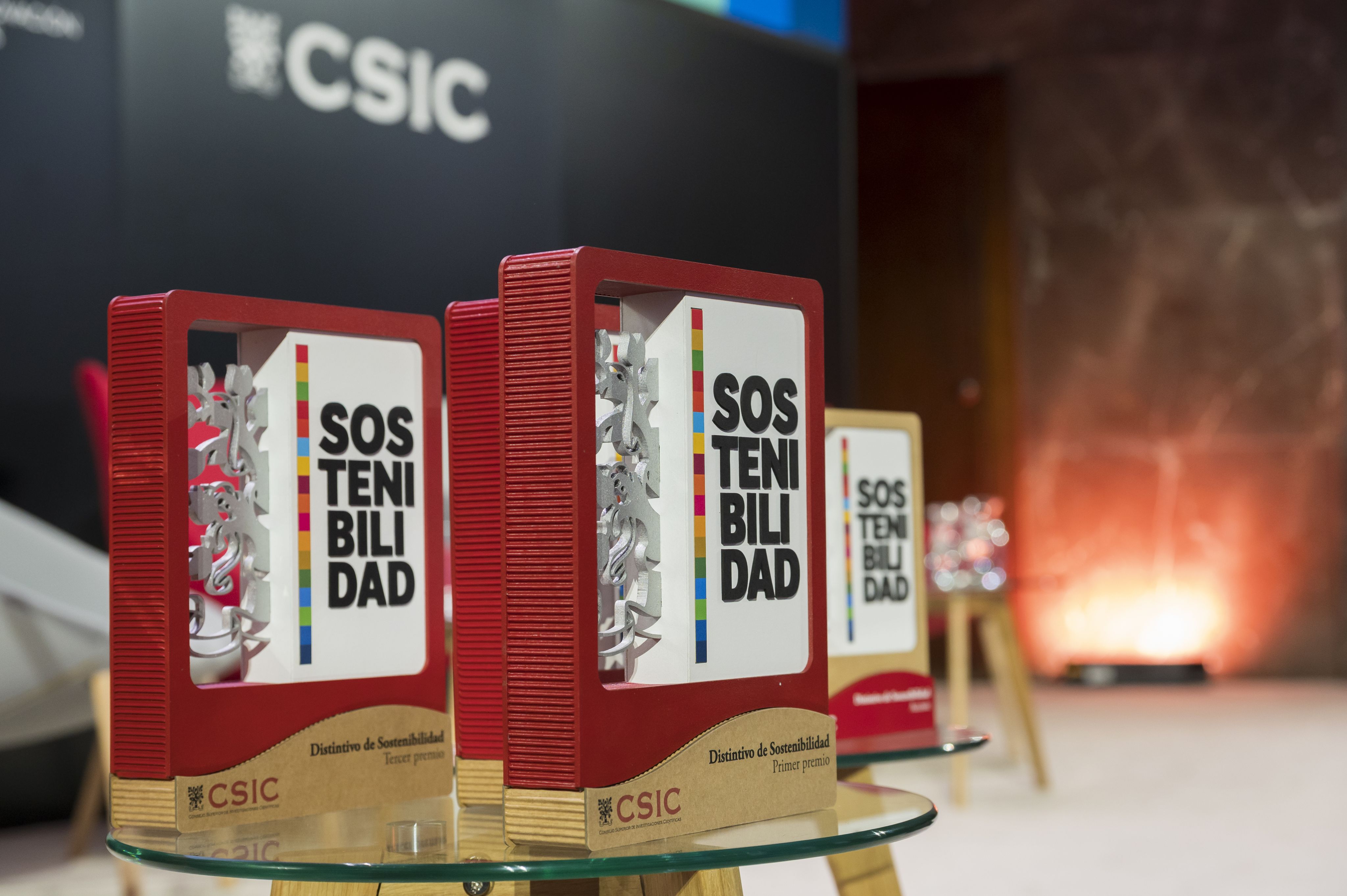
ICMAB obtained the Sustainability Distinctive last February | ICMAB
There are also very specific measures. We have minus eighty degree freezers that consume an enormous amount of energy. We have seen that many samples can be stored at minus seventy and that already represents a significant saving. Or things as basic as placing equipment in well ventilated spaces so that they do not have to work harder than necessary.
Now, the most difficult question is the object of the research. Which lines make sense in the current context and which involve an environmental or material impact that is difficult to justify. Sometimes you can opt for slower paths, less polluting, more reflective, instead of very resource intensive experimentation.
There are many inherent difficulties, trying to be coherent with this is very very difficult. For me the most interesting topic of discussion is the object of research itself, because it is not at all easy. It is one of those questions with no easy solution.
Related links: