


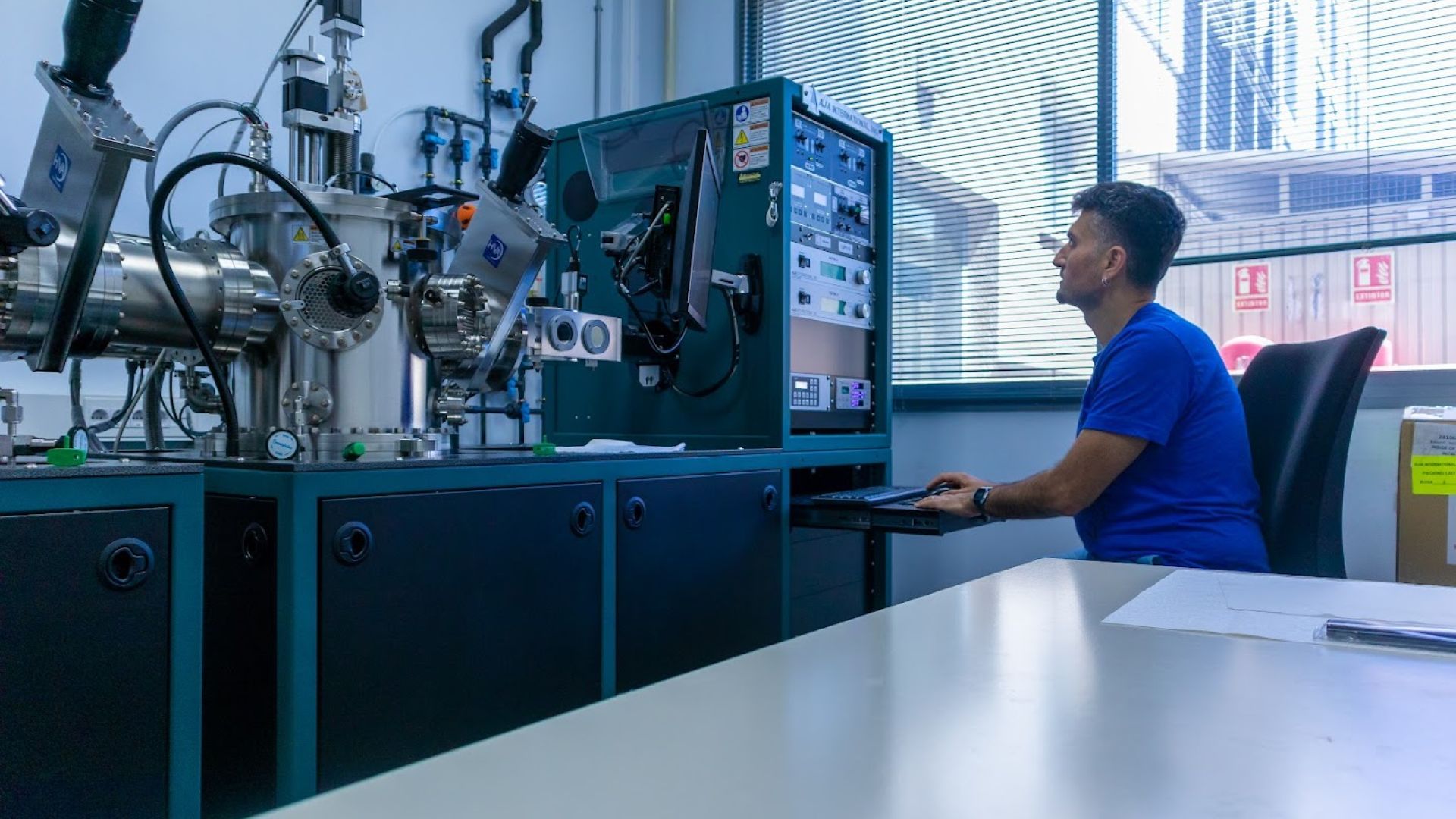
Researchers at the Institute of Materials Science of Barcelona (ICMAB-CSIC) of the SpinMad (Spintronics Materials and Devices) group led by Can O. Avci have recently published several studies tackling multiple challenges and making key advances in spintronics. In particular, the published works explore spin thermoelectricity, spin-torque phenomenon, magnetoresistive effects, interfacial chiral interactions, and electric field control of magnetism in a wide range of materials, with repercussions for both fundamental physics and technological applications.
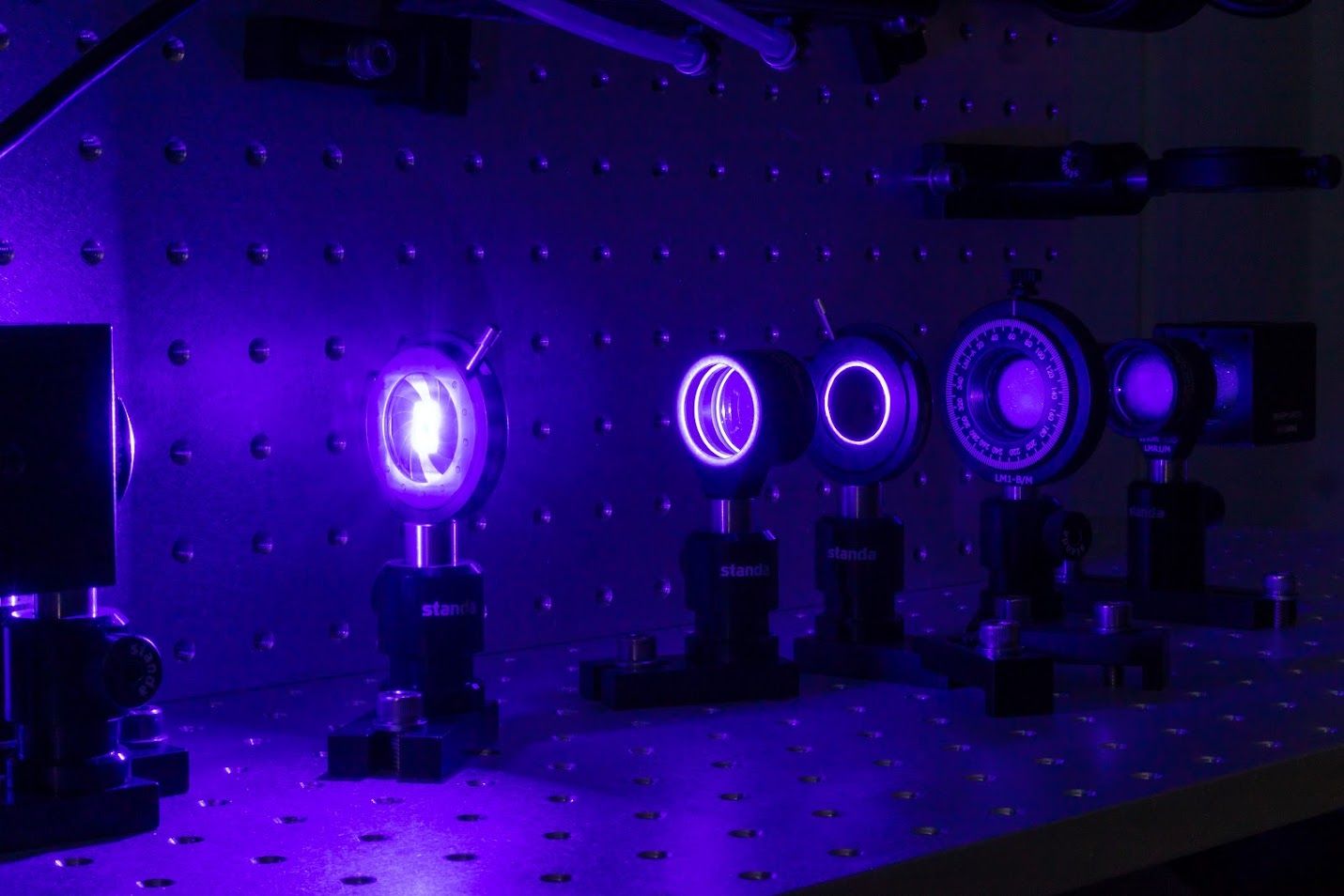
Magneto-optical characterization setup used for imaging magnetic domains in ultrathin films with micrometer-scale lateral resolution. SpinMad Lab | ICMAB-CSIC
Here is the full list of papers and brief notes on the novelty.
Decomposing measurements of the anomalous Nernst and Spin Seebeck effects in Fe-based metallic multilayers
Published in Physical Review Applied, this study analyzes how the anomalous Nernst and Spin Seebeck effects can be independently characterized and tuned in iron-based ferromagnetic heterostructures. These findings are crucial for optimizing spin-based thermoelectric devices, that could be used for thermal energy harvesting at the microscale.
ICMAB authors: J. Alejandro de Sousa, Silvia Damerio, Can O. Avci
Tunable Spin and Orbital Torques in Cu-Based Magnetic Heterostructures
This research, published in Nano Letters, explores how spin and orbital currents can be maximized and tuned through material optimization and electrical gating in copper-based magnetic heterostructures, opening new possibilities for low-power spintronics.
ICMAB authors: Silvia Damerio, Can O. Avci
Magnetoresistive reading of perpendicular magnetization in ferrimagnetic insulators enhanced through proximity coupling
Published in Physical Review Applied, this work demonstrates how the proximity effect can enhance magnetoresistive reading in ferrimagnetic materials, a key aspect for next-generation magnetic memory devices.
ICMAB authors: Weronika Janus, Can Onur Avci
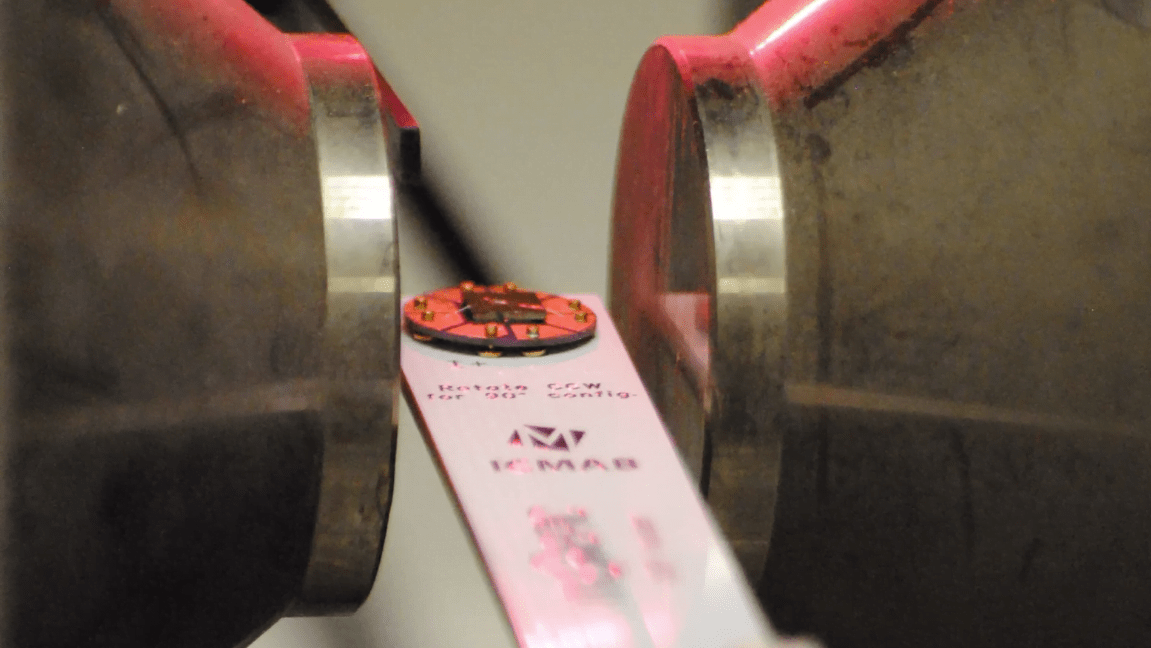
Typical substrate holder and circuitry used for connecting spintronic devices with the measurement electronics. SpinMad Lab | ICMAB-CSIC
Evidence of Long-Range Dzyaloshinskii–Moriya Interaction at Ferrimagnetic Insulator/Nonmagnetic Metal Interfaces
In a study published in Advanced Functional Materials, researchers have evidenced for the first time long-range Dzyaloshinskii–Moriya interactions at magnetic interfaces, questioning the widely accepted decade-long knowledge. These findings will be crucial magnetic insulator-based skyrmjon and domain wall devices.
ICMAB authors: Stefano Fedel, Mario Villa, Silvia Damerio, Jaume Gazquez, Can O. Avci
Harmonic Hall characterization of voltage-controlled magnetic anisotropy at ferromagnet/oxide interfaces
Published in Physical Review B, this study presents an easy method to precisely and quantitatively characterize voltage control of magnetic anisotropy at ferromagnet/oxide interfaces. The developed technique may allow fast screening of materials to build efficient magnetic tunnel juntions, building blocks of magnetic random access memories, with significantly reduced power consumption.
ICMAB authors: M. Fettizio, Can O. Avci
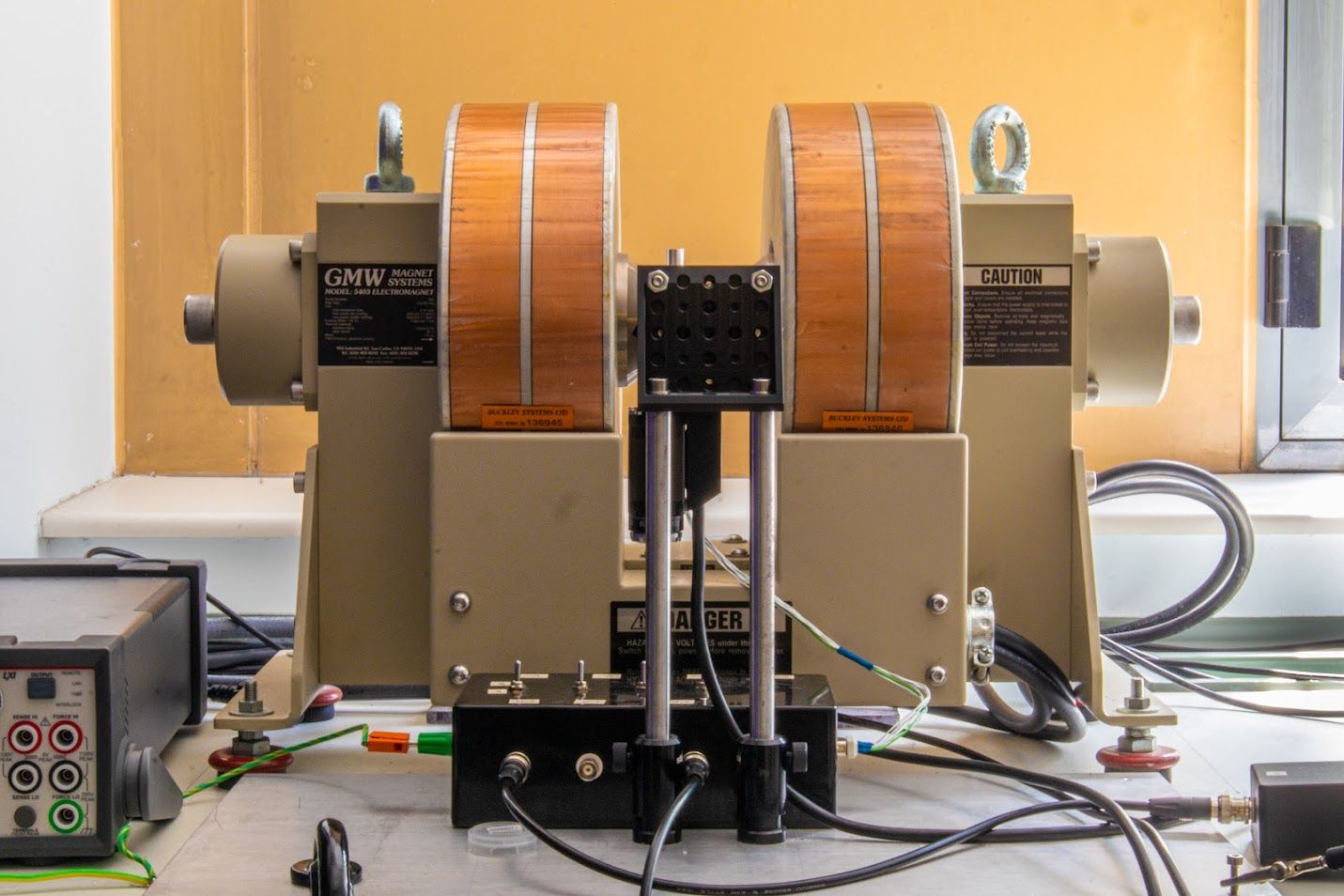
Magneto-electrical characterization setup used for electrical testing of microfabricated devices in a magnetic field environment. SpinMad Lab | ICMAB-CSIC
These advances contribute to the fundamental understanding of spin physics at the nanoscale and development of new spintronic devices with great potential for applications in memories and high-performance computing.
Congratulations to the authors on these outstanding contributions! A good 2025 start!
The SpinMad Group & the ERC MAGNEPIC Project
Can Onur Avci is a tenured scientist at ICMAB-CSIC, specializing in spin currents, spin-orbit-driven transport, and spintronic memory and logic devices. He leads the SpinMad group, an experimental research team within the MULFOX laboratory at ICMAB-CSIC, focusing on spintronics from materials development to device fabrication and testing.
His research is supported by multiple projects, including the ERC-funded MAGNEPIC (2021-2026), which aims to establish magnetic insulators as a key platform for spintronics. While conducting magnets have been central to spintronics, materials with strong spin-orbit coupling can efficiently convert charge currents into spin currents, enabling spin injection into insulating magnets. MAGNEPIC bridges long-standing knowledge of magnetic insulators with modern spintronics and measurement techniques.
The SpinMad team is currently formed by Can O. Avci (leader), postdocs Mustafa Erkovan (CONVERT), Takayuki Shiino (MAGNEPIC), Weronika Janus (SMARTSPIN) and Silvia Damerio (MAGNEPIC, MSCA Fellow); and PhD candidates Teodor Apetrei (MUST), Stefano Fedel (MAGNEPIC) and Matteo Fettizio (MAGNEPIC), apart from other MSc. and Bachelor students.