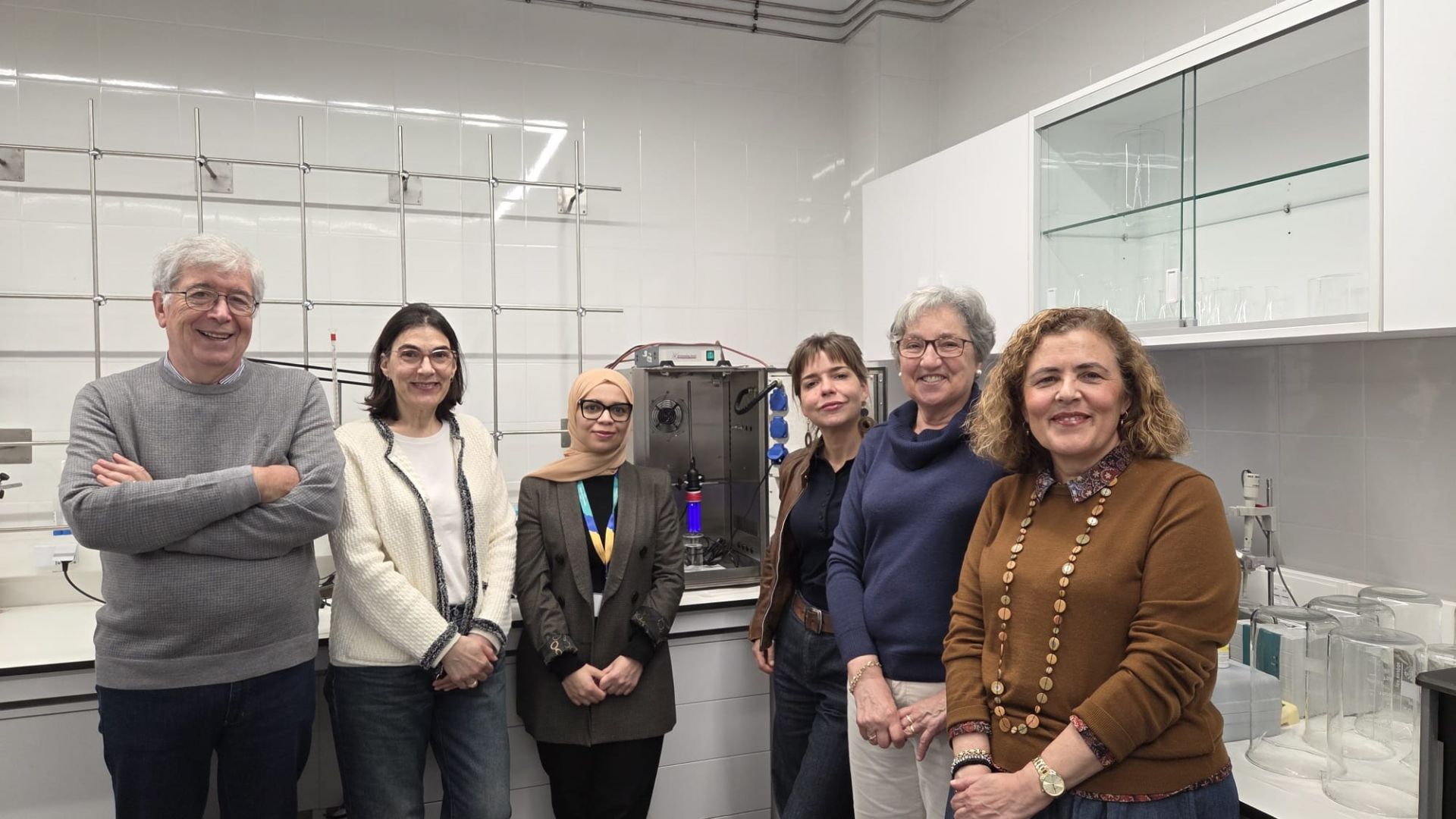
Researchers from the Department of Chemistry at the University of Girona (UdG), led by Isabel Romero and Enriqueta Anticó, in collaboration with the LEQUIA-UdG research group, and from the Institute of Materials Science of Barcelona (ICMAB-CSIC), led by Francesc Teixidor, have explored a new strategy to remove organic contaminants present in both drinking and wastewater using an innovative photocatalyst based on metal-carboranes.
The increasing demand for water, driven both by population growth and changing consumption habits as well as by the effects of climate change, has led to a growing reuse of reclaimed water for uses such as irrigation, industry, and even indirect reuse for human consumption. However, this water may contain organic contaminants in very small but potentially dangerous quantities, such as pesticides, pharmaceuticals, or personal care products, which are persistent and can accumulate in the environment. Substances such as the insecticide chlorpyrifos, the antibacterial agent triclosan, or synthetic fragrances present in cosmetics are often detected in surface and treated waters. Conventional water treatment systems do not always remove them effectively, making it necessary to develop new and more advanced technologies.
One of the most promising strategies is advanced oxidation processes, especially photocatalysis, which uses light to activate materials capable of degrading persistent contaminants. Although various photocatalytic materials have already been investigated, many present limitations such as reduced efficiency, low stability, or the need to add additional chemical reagents, which complicates their practical application. For this reason, current research focuses on developing new photocatalysts that are more efficient, reusable, and capable of operating under real conditions, with the aim of improving water treatment in a sustainable and affordable way.
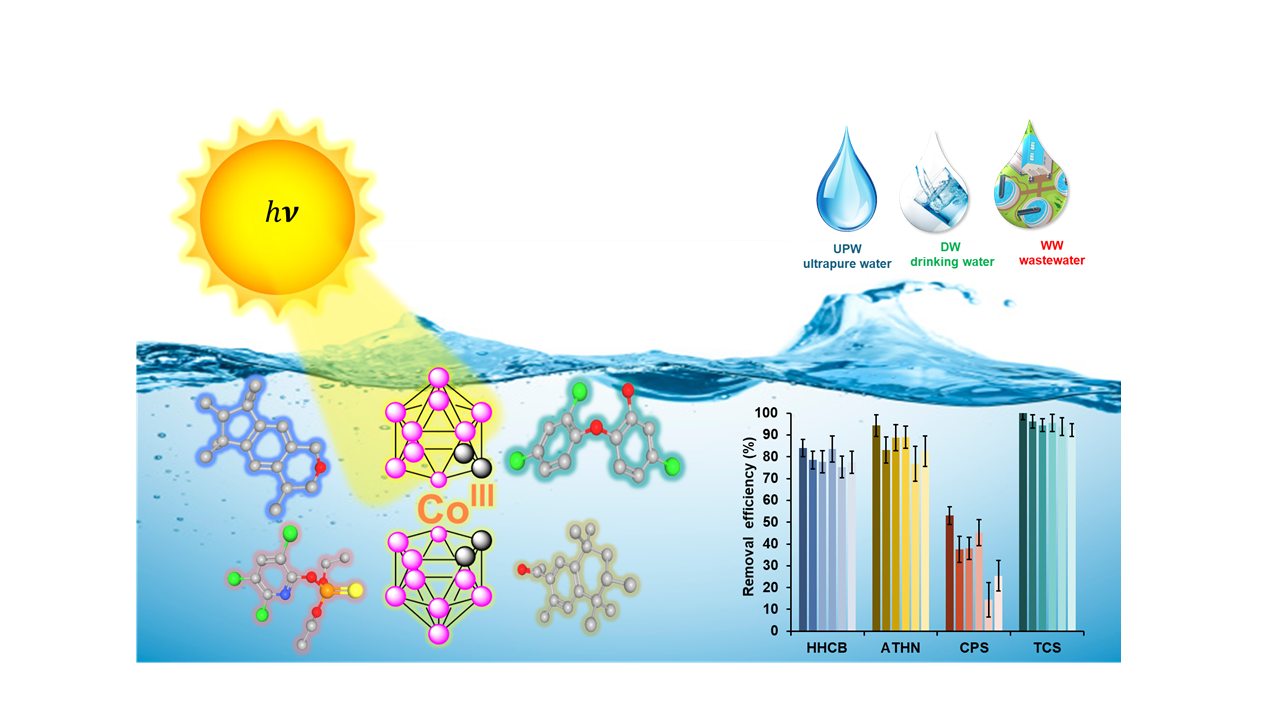
A cobaltacarborane-based photocatalyst, activated with UVA light, makes it possible to efficiently remove contaminants such as synthetic fragrances, pesticides, and antibacterial agents from different types of real water samples.
A New Strategy to Remove Contaminants
In this context, researchers from the Department of Chemistry at the University of Girona (UdG), led by Isabel Romero and Enriqueta Anticó, in collaboration with LEQUIA-UdG, and from the Institute of Materials Science of Barcelona (ICMAB-CSIC), led by Francesc Teixidor, have explored a new strategy to remove organic contaminants present in both drinking and wastewater using an innovative photocatalyst based on metal-carboranes. This compound is combined with modified graphene oxide to create a hybrid, reusable, and stable system that can be activated by ultraviolet light.
The results show that the system is effective in degrading several common contaminants such as synthetic fragrances, pesticides, and antibacterial agents in different types of water, including real water samples. The degradation performance of contaminants present in the water samples is particularly high under UVC light, while under UVA light it can be improved if the presence of dissolved oxygen is facilitated, which enhances the degradation process.
Analysis of the degradation products generated indicates that the treatment produces few potentially toxic by-products, and the material maintains its effectiveness after several cycles of use, demonstrating good stability and reusability.
Overall, these results highlight the potential of this new photocatalytic approach as a sustainable solution for removing emerging contaminants from water without the need to add additional chemical reagents, opening new opportunities to improve water treatment technologies.
Reference article
Metallacarborane-functionalized graphene oxide as a recyclable UVC/UVA photocatalyst for micropollutant removal
Nabila Mimouni, Alba Cabrera-Codony, Clara Viñas, Francesc Teixidor, Enriqueta Anticó, Isabel Romero.
Journal of Environmental Chemical Engineering 13 (2025) 119643
DOI: 10.1016/j.jece.2025.119643