


Zinc-air batteries are emerging as a promising alternative to today's most widely used energy storage technologies, such as lithium-ion batteries. They offer key advantages including low cost, high safety and reduced environmental impact. However, zinc-air batteries still face a number of technical challenges before the technology can be commercialised on a large scale. One of the most critical is the efficiency of a key chemical reaction: oxygen reduction, which takes place at the battery's positive electrode (cathode) and is essential for its operation.
In this context, researchers from ICN2, in collaboration with ICMAB-CSIC and the Universidad de Almería researchers, have investigated an innovative strategy to improve this reaction by using soluble inorganic chemical structures known as polyoxometalates (POMs), which contain different metal atoms. The study is led by ICN2 researcher Leandro Bengoa, under the supervision of ICN2/CSIC researcher Pedro Gómez, and in collaboration with ICMAB researcher Nieves Casañ. The results have been published in the journal Electrochimica Acta.
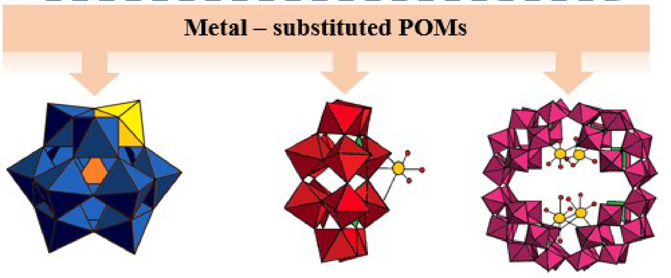
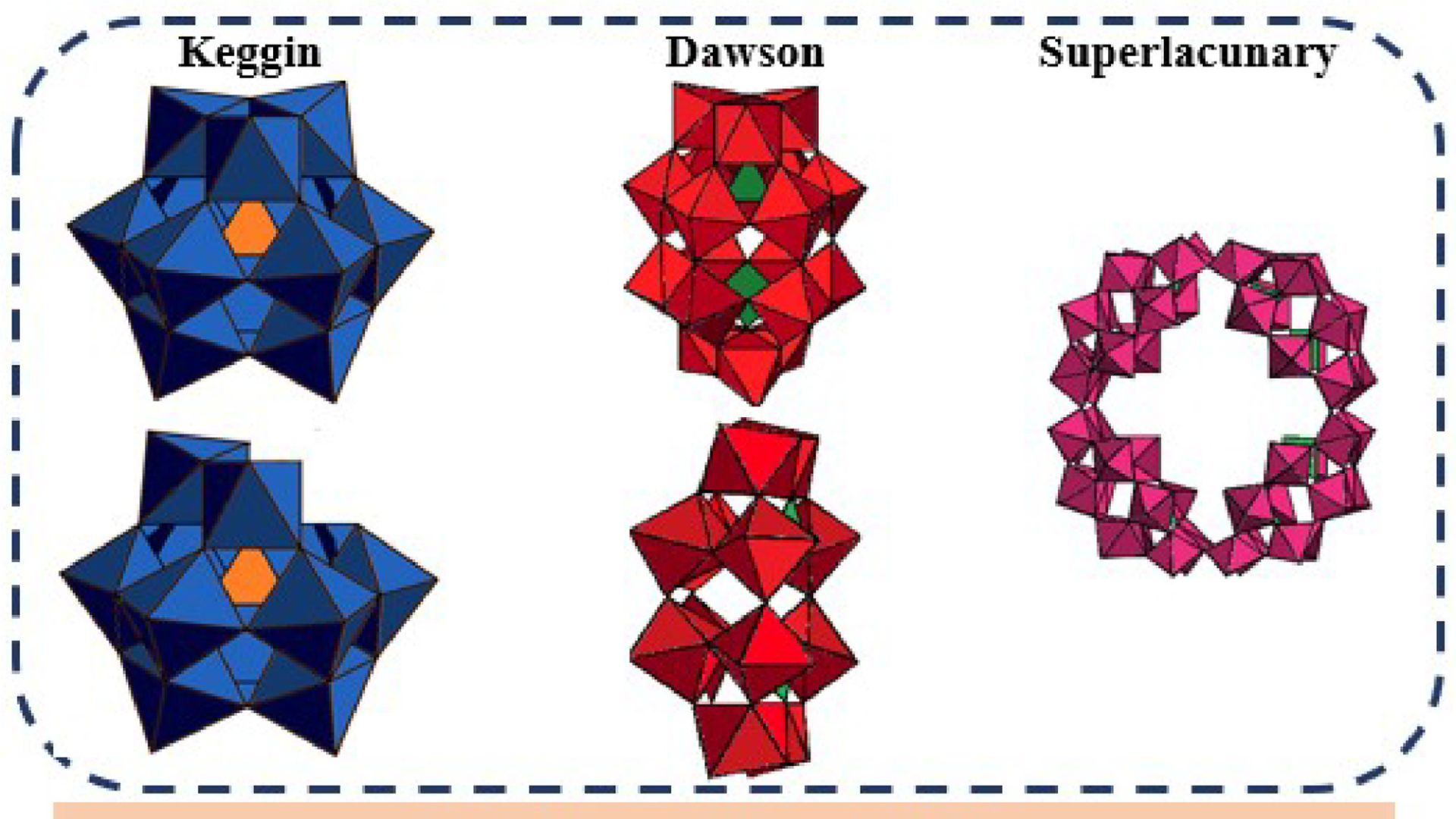
Polyhedral model of the different clusters polyanions in this work. | Electrochimica Acta
The study shows that the incorporation of certain types of POMs can significantly enhance the oxygen reduction process. In particular, POMs with a Keggin-type structure—one of the most common molecular arrangements, with an almost spherical distribution of atoms—and that contain cobalt in their composition were the most effective. In addition, the results suggest that these soluble catalysts not only improve the efficiency of the reaction but may also help to protect the battery materials from degradation, thereby extending their lifetime.
In summary, this research opens up new possibilities for the development of rechargeable batteries that are more sustainable, efficient and safer —ideal for integration into renewable energy systems. It also highlights the great potential of soluble catalysts as key tools in the transition to cleaner energy technologies.
Reference article
Enhanced oxygen reduction reaction using polyoxometalates as mediators in near-neutral electrolytes for zinc-air batteries.
Inclán, A; Crespo-Villanueva, A; Navarro, Y; López-Ortiz, F; Argurio, R; González-Gil, RM; Gómez-Romero, P; Casañ-Pastor, N; Bengoa, LN.
Electrochimica Acta. 526, 146180. (2025)
doi:10.1016/j.electacta.2025.146180
News from ICN2: A New Path Toward More Sustainable and Durable Batteries - ICN2